The mortgage loan process can often feel like a whirlwind of paperwork, requirements, and waiting. Among the many stages of securing a mortgage, underwriting is one of the most crucial—and, for many borrowers, the most stressful. But how long does underwriting take, and why is it such an essential part of the process?
In simple terms, underwriting is when a lender evaluates the borrower’s financial health and assesses the risk involved in issuing a mortgage loan. While the timeline for underwriting can vary, understanding what happens during this phase—and what factors influence its duration—can help borrowers manage expectations and reduce the anxiety that comes with waiting.
In this blog, we’ll break down the underwriting process, explore typical timelines, and discuss how you can ensure a smoother, faster experience. Whether you’re a first-time homebuyer or a seasoned investor, knowing how to navigate this part of the process can save you time and frustration, ultimately getting you closer to the keys to your new home.
What is Underwriting in a Mortgage Loan?
Underwriting is a critical step in the mortgage loan process where a lender evaluates whether to approve or deny a loan application. Essentially, it’s the lender’s way of assessing risk to ensure they are making a sound financial decision.
During underwriting, an underwriter reviews the borrower’s financial information—such as income, credit history, employment status, and the value of the property being purchased. The underwriter’s goal is to verify that the borrower has the ability to repay the loan and that the property is worth the amount being financed.
Key elements typically assessed during underwriting include:
Credit Score – The borrower’s credit score gives lenders insight into their creditworthiness and helps determine the interest rate.
Income Verification – Lenders want to know the borrower’s income is stable enough to cover monthly mortgage payments. This can involve reviewing pay stubs, tax returns, or bank statements.
Property Appraisal – The property is appraised to ensure its value aligns with the loan amount requested. This step protects the lender from approving loans for properties worth less than the purchase price.
Debt-to-Income Ratio – Lenders use this ratio to measure the borrower’s ability to take on additional debt. It’s calculated by dividing monthly debt payments by gross monthly income.
Understanding underwriting helps demystify the process and highlights why it can take time. The underwriter is essentially confirming that everything aligns—ensuring the borrower can repay the loan while minimizing the lender’s risk.
Typical Timeline for Mortgage Loan Underwriting
The underwriting process typically takes anywhere from one to three weeks to complete, depending on several factors. While it might feel like an eternity when you’re eagerly waiting for your loan approval, understanding the timeline and the elements that impact it can help you manage expectations.
Standard Underwriting Timeline:
The usual timeline is between one to three weeks for underwriting, but it’s important to remember that each loan is different. The complexity of the borrower’s financial situation, the type of loan, and the lender’s workload all play a significant role in how long underwriting takes.
Factors that Affect the Timeline:

Loan Type – Different loan types, such as FHA, VA, or conventional loans, can have varying underwriting timelines. Government-backed loans like FHA loans tend to take a bit longer because they require additional documentation and scrutiny.
Document Completeness – The more organized and complete the borrower’s documentation is, the quicker the process will go. If documents are missing or incomplete, underwriting can be delayed as the lender requests additional information.
Lender’s Workload – Lenders often experience busier seasons, especially during the spring and summer months when more people are looking to buy homes. This can cause underwriting to take longer if the lender is overwhelmed with applications.
While these are typical timeframes, it’s worth noting that delays can sometimes occur. However, knowing these factors can help you anticipate potential holdups and ensure you’ve prepared everything needed for a smooth underwriting process.
Common Delays in the Underwriting Process
While the underwriting process is meant to be thorough and efficient, there are several factors that can cause delays. These delays often lead to frustration for borrowers eager to move forward with their mortgage loan. Understanding the common reasons for these holdups can help you avoid potential pitfalls and ensure a smoother experience.
1. Missing or Incomplete Documentation
One of the most common causes of underwriting delays is incomplete or missing documentation. If the underwriter finds that important documents—such as tax returns, bank statements, or proof of income—are absent or insufficient, they will need to request the missing information from the borrower. This can significantly slow down the process, especially if the borrower takes time to respond.
2. Complicated Financial Situations
Borrowers with irregular income or complex financial profiles may face delays as underwriters require more detailed information to evaluate their financial stability. Examples include:
- Self-employed borrowers who must provide additional documentation like profit and loss statements or business tax returns.
- Borrowers with multiple sources of income or a history of late payments may require additional reviews or approval from senior authorities.
3. Appraisal Issues
The appraisal process can also contribute to delays. A few common scenarios include:
- The property appraisal coming in lower than expected, which may require renegotiating the loan terms or asking the borrower to increase their down payment.
- Delays in scheduling the appraisal or issues that require a re-evaluation can also slow down underwriting.
4. Lender’s Backlog
During peak seasons, lenders may experience a higher volume of loan applications. If the underwriting team is overwhelmed with cases, it can lead to delays in reviewing each individual application.
By understanding these common causes of delays, borrowers can take proactive steps to minimize their impact. Ensuring all documentation is complete and accurate, maintaining open communication with the lender, and addressing any financial complexities in advance can help speed up the process and reduce the chances of delays.
How to Speed Up the Underwriting Process?
The underwriting process can feel like it drags on, but there are several steps borrowers can take to help speed things up. By being proactive and organized, you can reduce delays and potentially shorten the time it takes for your mortgage loan to be approved.
One of the most effective ways to expedite underwriting is to submit complete and accurate documentation from the start. Missing or incomplete paperwork is one of the most common causes of delays, so ensuring that all documents are properly filled out and submitted at the outset can prevent back-and-forth requests from the lender.
Common documents include proof of income, tax returns, bank statements, and credit history. Having these readily available when you first apply can save you a significant amount of time.
Another key step in speeding up the underwriting process is maintaining open communication with your lender. If the underwriter has any questions or needs clarification on a document, responding quickly can prevent delays. It’s also essential to keep the lender informed of any changes in your financial situation, such as a new job or significant purchases, as this could affect your loan application.
For those who want to minimize underwriting delays even further, obtaining a pre-approval before starting the homebuying process can be a game-changer. A pre-approval means that your financial information has already been reviewed by the lender, which can significantly streamline the underwriting process when you find a property. It shows the lender that you’re a serious buyer, and many lenders can process your application faster if you’ve already been pre-approved.
Lastly, it’s important to stay organized and proactive throughout the entire mortgage process. While underwriting can’t be rushed, staying on top of your documentation, responding to any requests promptly, and ensuring your financial situation remains stable can help the process move along as quickly as possible.
By following these steps, you can reduce the likelihood of delays and get your mortgage loan approved in a timely manner, making the overall home-buying experience less stressful and more efficient.
Statistics and Industry Insights
Understanding the typical timelines and challenges of the underwriting process is one thing, but having data-driven insights can provide even more clarity. Here are some relevant statistics and insights that reflect the current state of mortgage underwriting.
According to a recent study by Ellie Mae, the average time for underwriting a mortgage loan is approximately 23 days. This timeline can vary based on the factors we’ve discussed, such as loan complexity, document completeness, and the lender’s workload.
Research from the Mortgage Bankers Association indicates that around 20% of mortgage applications are delayed due to underwriting challenges. These delays can stem from missing documentation, complex financial situations, or appraisal issues.
These statistics underscore the importance of being prepared and responsive throughout the underwriting process. While delays are common, knowing the average timeline and the factors that cause them can help you plan accordingly and reduce unnecessary stress.
Furthermore, understanding these industry trends can help borrowers manage expectations and avoid becoming frustrated when underwriting takes longer than anticipated. By staying on top of your paperwork, maintaining clear communication with your lender, and addressing potential issues early, you can minimize the chances of your application being part of the delayed percentage.
Wrap-Up
The underwriting process is a vital but sometimes unpredictable part of securing a mortgage loan. While the timeline can range from one to three weeks, several factors—such as the complexity of your financial situation, the type of loan, and the lender’s workload—can influence the overall duration. While it’s easy to become anxious as you wait for approval, knowing what to expect and understanding the potential delays can help you stay calm and in control.
To make the underwriting process as efficient as possible, it’s essential to plan ahead. This means gathering all necessary documentation early, responding quickly to requests from your lender, and keeping your financial situation stable throughout the process. You need to partner with The Pro Accountants as we understand how crucial timely loan approval is for both homebuyers and investors.
Our team can help guide you through the complexities of managing your finances during the mortgage process, ensuring that your documents are in order and your financial situation is optimized for the best possible outcome. If you’re looking for expert advice or assistance with your mortgage application, we’d love to help. Schedule a meeting with us today to learn more about how we can support you during your home-buying journey.
FAQs
1. What is mortgage loan underwriting?
Mortgage loan underwriting is the process where a lender evaluates the risk of a loan application by reviewing the borrower’s financial documents. The underwriter assesses factors like credit score, income, debt-to-income ratio, and the appraised value of the property to determine whether the borrower is likely to repay the loan.
2. How long does underwriting take for a mortgage loan?
Underwriting typically takes between 1 to 3 weeks. However, this can vary depending on factors like the type of loan, the complexity of the borrower’s financial situation, the lender’s workload, and the completeness of the submitted documentation.
3. What documents are needed for mortgage underwriting?
Common documents required during underwriting include:
- Proof of income (pay stubs, tax returns, bank statements)
- Credit report
- Employment verification
- Property appraisal
- Proof of assets (e.g., savings or retirement accounts)
- Personal identification (driver’s license, Social Security number)
4. What causes delays in mortgage underwriting?
Several factors can cause delays in the underwriting process:
- Missing or incomplete documentation
- Complicated financial situations (e.g., self-employment, multiple income sources)
- Issues with property appraisals
- A lender’s backlog or high application volume
5. Can underwriting be expedited?
While underwriting generally follows a set timeline, you can help speed up the process by submitting complete and accurate documentation, maintaining open communication with your lender, and responding quickly to any requests for additional information.
6. Can I be denied after underwriting?
Yes, it’s possible to be denied after underwriting if issues arise during the review of your financial situation, such as a low credit score, high debt-to-income ratio, or a low property appraisal. However, you may be able to appeal or address these issues before final approval.
7. What is the difference between pre-approval and pre-qualification?
Pre-qualification is an informal estimate of how much you can borrow based on your stated income and credit score. Pre-approval, on the other hand, is a more formal process where the lender verifies your financial information and gives you a more accurate loan amount. Pre-approval typically speeds up underwriting when you find a property.
8. Do underwriters communicate directly with borrowers?
Typically, underwriters do not communicate directly with borrowers. Instead, the loan officer or mortgage broker acts as the intermediary. However, they may contact the borrower indirectly if additional information is needed during underwriting.
9. What happens if my loan is denied during underwriting?
If your loan is denied, the lender will inform you of the reasons behind the decision. You can then work to address these issues—such as improving your credit score, reducing debt, or providing additional documentation—and reapply for a loan or consider different loan options.
10. How can I prepare for underwriting?
To prepare for underwriting, gather and organize all necessary financial documents early, such as tax returns, bank statements, and proof of income. Make sure all the information you provide is accurate and complete. Also, stay in close communication with your lender to ensure the process moves smoothly.
Starting a business excites a lot to most of the visionary business leaders however, it is one of the most challenging aspect as well. Especially if you have to manage your finances sideways. You have to streamline your cash flow to plan for future growth while managing all the business activities. This is the step where most of the entrepreneurs find themselves overwhelmed and they need to contact CFO Services for Startups.
A Chief Financial Officer (CFO) is a critical player in any business, responsible for overseeing financial operations, ensuring compliance, and driving strategic financial decisions. For startups, the challenge lies in affording a full-time chief financial officer while operating on limited resources. Fortunately, outsourced or fractional CFO services offer a cost-effective solution, providing expert financial guidance tailored to a startup’s unique needs.
The whole blog will explain you how chief financial officer services can empower startups to overcome financial hurdles and set a strong foundation for sustainable growth.
What is Underwriting in a Mortgage Loan?
Underwriting is a critical step in the mortgage loan process where a lender evaluates whether to approve or deny a loan application. Essentially, it’s the lender’s way of assessing risk to ensure they are making a sound financial decision.
During underwriting, an underwriter reviews the borrower’s financial information—such as income, credit history, employment status, and the value of the property being purchased. The underwriter’s goal is to verify that the borrower has the ability to repay the loan and that the property is worth the amount being financed.
Key elements typically assessed during underwriting include:
Credit Score – The borrower’s credit score gives lenders insight into their creditworthiness and helps determine the interest rate.
Income Verification – Lenders want to know the borrower’s income is stable enough to cover monthly mortgage payments. This can involve reviewing pay stubs, tax returns, or bank statements.
Property Appraisal – The property is appraised to ensure its value aligns with the loan amount requested. This step protects the lender from approving loans for properties worth less than the purchase price.
Debt-to-Income Ratio – Lenders use this ratio to measure the borrower’s ability to take on additional debt. It’s calculated by dividing monthly debt payments by gross monthly income.
Understanding underwriting helps demystify the process and highlights why it can take time. The underwriter is essentially confirming that everything aligns—ensuring the borrower can repay the loan while minimizing the lender’s risk.
Typical Timeline for Mortgage Loan Underwriting
Running a startup while managing finances can be particularly daunting. Many founders are experts in their respective fields but lack the financial expertise needed to navigate the complexities of business finance. Without the right guidance, startups often face several critical financial challenges, including:
- Struggling to maintain a healthy balance between income and expenses.
- Failing to anticipate future expenses, funding needs, or growth opportunities.
- Convincing investors or lenders requires clear financial strategies and well-prepared projections.
- Managing financial records incorrectly that leads them to inaccurate reporting.
- Operating without a clear roadmap for achieving financial objectives.
- Managing expenses without proper strategy resulting in depleting their resources too quickly.
CFO services act as a lifeline for startups, addressing these pain points with precision. A chief financial officer brings not just expertise but also strategic insight, enabling businesses to create robust financial plans, secure necessary funding, and streamline their operations. With the right CFO services, startups can focus on their core strengths while leaving the complexities of financial management to experienced professionals.
What are CFO Services?
CFO services encompass a range of financial management solutions provided by an experienced chief financial officer. These services are designed to help businesses, especially startups, establish a strong financial foundation, and make informed decisions.
For startups, chief financial officer services typically involve responsibilities such as crafting tailored financial strategies that align with both short-term goals and long-term vision. A chief financial officer also identifies and mitigates financial risks, ensuring the business stays protected from potential setbacks. Another critical role is maintaining regulatory compliance, which safeguards the business from penalties and reputational harm.
Types of CFO Services
There are several ways startups can engage CFO services depending on their specific needs and budget:
In-House CFOs
A full-time CFO dedicated to the company. While ideal for established companies, this option is often too costly for startups.
Outsourced or Fractional CFOs
These are part-time chief financial officers hired on a contract basis, offering expert guidance without the expense of a full-time hire.
Virtual CFOs
These chief financial officers are hired for specific projects, such as fundraising or mergers, allowing startups to pay only for the expertise they need at a given time.
The flexibility these CFOs provide allows you to focus on growing your business rather than calculating the nitty gritty.
Benefits of CFO Services for Startups
One of the most significant advantages of chief financial officer services is the ability to access strategic financial planning on a limited budget. Unlike a full-time hire, outsourced or fractional CFOs provide expert advice at a fraction of the cost.
Another key benefit is improved investor relations and fundraising. Chief financial officers understand what investors and lenders are looking for and can prepare financial statements, projections, and strategies that inspire confidence. This expertise often leads to successful funding rounds, giving startups the capital needed to grow.
They also enable data-driven decision-making, which is essential for scaling a business. With access to accurate financial data and insights, startups can make informed decisions about expanding operations, entering new markets, or launching new products. Furthermore, startups gain the advantage of working with professionals who bring years of experience and a deep understanding of financial trends, ensuring they remain competitive in their industry.
Finally, they provide startups with a level of financial expertise that would be difficult to replicate in-house. From streamlining operations to ensuring compliance with financial regulations, a CFO’s guidance is invaluable in building a sustainable and scalable business. These services empower startups to focus on their core competencies while leaving the complexities of financial management to seasoned experts.
Choosing the Right CFO Services for Your Startup
Selecting the right CFO services is a crucial decision for any startup. The choice depends on factors such as your current financial stage, specific needs, and budget. Not all startups require the same level of service, so understanding what works best for your business is essential.
Factors to Consider
When evaluating chief financial officer service providers, keep the following considerations in mind:
- Early-stage startups may benefit from fractional or virtual chief financial officer services, while growth-stage companies might need more hands-on financial guidance.
- Outsourced CFOs offer flexibility, allowing startups to access top-tier expertise without the high costs of a full-time hire.
- Some startups require specific expertise, such as fundraising, compliance, or financial restructuring. A service tailored to these needs can be invaluable.
Key Traits to Look For

- Look for a provider with a strong track record in helping startups achieve financial success.
- A great CFO doesn’t just manage numbers—they align financial strategies with your startup’s growth goals.
- Modern CFOs leverage tools and software to streamline financial operations and provide real-time insights.
- Effective communication ensures that complex financial concepts are presented clearly, aiding better decision-making.
Challenges Solved by CFO Services
If your loan is denied, the lender will inform you of the reasons behind the decision. You can then work to address these issues—such as improving your credit score, reducing debt, or providing additional documentation—and reapply for a loan or consider different loan options.
10. How can I prepare for underwriting?
Startups often face a variety of financial hurdles that can hinder their growth and success. CFO services play a critical role in resolving these issues by providing expert guidance and tailored financial strategies.
One common pain point that many startups experience is budget overruns. Without proper financial oversight, startups can easily exceed their budgets, leading to cash flow problems and, in some cases, financial instability. CFOs help ensure that budgets are realistic, monitored regularly, and adjusted as needed, keeping spending under control and aligned with the company’s goals.
Another challenge faced by startups is misaligned financial goals. Entrepreneurs often focus on growth and innovation but neglect the financial aspects of their business. A CFO helps align the startup’s financial goals with its overall vision, ensuring that every decision made is in line with both short-term needs and long-term sustainability. This alignment is essential for effective scaling, securing investments, and maximizing profitability.
Startups also struggle with a lack of financial expertise. Founders may be experts in their field, but not all have the financial background needed to make informed decisions. CFO services provide access to a wealth of knowledge and experience that would otherwise be unavailable to small businesses.
For many startups, these pain points can be overwhelming, leading to poor financial decision-making and stunted growth. By addressing these issues, they not only stabilize the financial foundation but also help businesses move forward strategically.
How CFO Services Help Startups Stay on Budget?
One of the biggest challenges for startups is managing their budget effectively. Financial mismanagement can quickly lead to cash flow problems, missed opportunities, and even business failure. CFO services are key to ensure that you not only stay on budget but also optimize you financial resources.
Budget Planning and Monitoring
They bring a high level of financial expertise to help you create detailed budgets based on realistic projections. They monitor these budgets regularly, ensuring that spending stays within set limits and identifying any areas where adjustments are needed. By tracking actual versus projected expenses, they provide startups with the necessary insights to make informed decisions.
Cost Optimization
They go beyond just managing budgets—they focus on optimizing costs. Startups often face limited resources, so it’s essential to allocate funds in the most efficient way possible. A professional can analyze spending patterns and recommend areas for cost reduction without compromising essential business activities.
Financial Forecasting
Accurate forecasting is crucial for ensuring that a startup remains financially stable as it grows. chief financial officer’s utilize historical financial data, industry trends, and market conditions to predict future cash flow, potential expenses, and revenue streams. This enables startups to prepare for unexpected financial challenges and avoid overspending.
In addition to these, CFOs help startups implement strategic financial processes and tools that allow for better tracking and management of their budget. They can also assist in adjusting financial goals as the business grows, ensuring that the startup’s financial plans evolve in line with its changing needs.
The Role of CFO Services in Fundraising for Startups

Fundraising is one of the most crucial milestones for any business. Without the right financial strategies and documents, securing funding can be an uphill battle. CFO services play a pivotal role in helping startups prepare for and succeed in fundraising by ensuring that all financial aspects are well-prepared, strategic, and persuasive to potential investors or lenders.
Preparing Financial Statements and Projections
Investors and financial institutions require detailed financial statements to assess the health of a startup before committing funds. They help businesses create comprehensive, accurate, and professional financial statements, including profit and loss statements, balance sheets, and cash flow statements. These documents are essential for demonstrating a startup’s financial viability and potential for growth.
In addition to historical financials, they also develop financial projections that outline future growth, revenue potential, and expense forecasts. These projections are critical for showcasing how the business plans to scale and generate a return on investment. A well-crafted financial forecast instills confidence in investors and makes it easier for startups to secure the funding they need.
Valuation and Business Strategy
These professionals also assist SMBs in determining their company valuation which is among the most crucial element when seeking investment. A thorough and accurate valuation helps businesses understand their worth in the market and provides investors with a clearer picture of the potential value of their investment.
Being an expert, they also help align business strategies with fundraising goals to ensure that businesses not only present solid financials but also have a clear roadmap for how the funds will be used. By presenting a strong financial plan alongside an actionable business strategy, startups make a more compelling case for investment.
Pitching to Investors and Lenders
As you need to have a strong pitch to compel the investors, the backed by solid financial data. They help prepare pitch decks that highlight the financial strengths of the business, ensuring that the startup presents itself as a viable investment opportunity. From refining the financial story to answering tough questions, they ensure that startups approach fundraising with the right strategy and preparation.
Ultimately, these services provide the financial expertise and resources needed to navigate the fundraising process successfully. Whether it’s preparing documentation, developing projections, or assisting with investor relations, they help startups build trust with potential investors and secure the capital they need to grow.
Wrap-Up
CFO services offer the expertise, resources, and insights that startups require to manage their finances effectively, secure funding, stay compliant, and optimize their operations.
By partnering with a skilled chief financial officer, you can address critical pain points such as budget management, financial forecasting, fundraising, and compliance. A chief financial officer ensures that financial decisions are based on data-driven insights, helping businesses make informed choices that align with both their short-term needs and long-term objectives.
At The Pro Accountants, we specialize in offering expert CFO services tailored to SMBs and large enterprises. Our team works closely with you to create customized financial strategies that support your business goals, allowing you to focus on what you do best.
Ready to take the next step in securing your startup’s financial future? Schedule a meeting with The Pro Accountants today and let us help you navigate the financial challenges of startup growth. Together, we can create a roadmap for success that positions your business for long-term financial health.
FAQs
What exactly is a CFO service for startups?
A CFO service for startups provides expert financial guidance to help businesses manage their financial operations. This includes budgeting, forecasting, financial analysis, and ensuring compliance with tax laws and regulations. CFO services help startups make informed decisions to optimize their financial performance and growth.
Do I really need a CFO if my startup is small?
Even small startups can benefit from CFO services. While you might not need a full-time CFO initially, outsourced or fractional CFO services can provide critical financial insights, help manage cash flow, and ensure that your finances are set up for growth. It’s a cost-effective way to access high-level expertise without the commitment of hiring a full-time executive.
How do CFO services help with fundraising for startups?
CFO services assist with preparing financial statements, projections, and valuations that are essential for attracting investors. A CFO can help craft compelling pitch decks and financial reports that show potential investors the startup’s growth potential, financial health, and how the funds will be used.
What is the cost of hiring CFO services for a startup?
The cost of CFO services varies based on the complexity of your needs and the level of service required. Startups can choose from different pricing models, such as hourly rates, monthly retainers, or project-based fees. Outsourced or fractional CFO services are typically more affordable than hiring a full-time CFO, making them ideal for startups with budget constraints.
How can CFO services help with financial compliance?
CFO services ensure that your startup stays compliant with financial regulations, such as tax laws and industry-specific requirements. They help maintain accurate financial records, file taxes on time, and avoid penalties or legal issues. CFOs also stay updated on changing regulations, ensuring your business meets all compliance requirements
Can a CFO help with budgeting and managing cash flow?
Yes, one of the primary roles of a CFO is to manage budgeting and cash flow. They help startups create realistic budgets based on revenue and expense projections, monitor spending, and adjust financial plans as needed. CFOs also identify areas for cost optimization to ensure that the business stays within budget and has the cash flow it needs to operate smoothly.
What are the key financial reports a CFO helps prepare?
A CFO will help prepare key financial reports such as:
Profit and Loss Statement: Shows revenue, costs, and profits over a specific period.
Balance Sheet: Lists assets, liabilities, and equity.
Cash Flow Statement: Tracks the flow of cash in and out of the business.
These reports are essential for making informed financial decisions and attracting investors or lenders.
How do CFO services assist in business strategy?
CFO services go beyond financial management—they help align financial strategies with overall business goals. By analyzing financial data and market trends, a CFO can provide valuable insights to guide decisions on expansion, pricing, investments, and cost reduction, ensuring the business is on track to meet its strategic objectives.
Can CFO services help with tax planning?
Yes, CFO services play a key role in tax planning and compliance. They help startups minimize tax liabilities through strategic planning, ensuring that the business takes advantage of any available deductions, credits, or incentives. CFOs also ensure that tax filings are accurate and submitted on time, preventing costly mistakes.
What’s the difference between a full-time CFO and outsourced CFO services?
A full-time CFO is a permanent executive responsible for managing all aspects of a company’s finances. Outsourced CFO services, on the other hand, provide the expertise of a CFO on a part-time or contract basis. This allows startups to access high-level financial guidance at a fraction of the cost, making it ideal for businesses that don’t yet need a full-time CFO.
Managing the finances of a small homeowners association (HOA) can often feel like navigating a maze. With limited resources, tight budgets, and a diverse group of stakeholders, you face unique challenges when it comes to keeping your financials in order. Whether it’s tracking monthly dues, managing reserve funds, or ensuring transparency to avoid disputes, the need for meticulous bookkeeping is paramount.
Bookkeeping for small HOAs isn’t just about keeping the lights on; it’s about building trust within the community, making informed financial decisions, and preparing for the future. It can be the difference between smooth operations and costly mistakes.
In this blog, we’ll explore essential bookkeeping tips tailored to the needs of small HOAs, with practical advice to help simplify financial management. From selecting the right software to preparing for audits, we’ll break down the steps and ensure that its financials are always in top shape.
Common Bookkeeping Challenges for Small HOAs
Small homeowners associations often face a unique set of challenges when it comes to managing their finances. Due to their limited size and resources, their bookkeeping is typically handled by a small group of volunteers, or even just a few board members. This can result in common financial management issues, such as:
- Limited Resources and Manpower
Small HOAs often operate on tight budgets with minimal staff. As a result, board members or volunteers are tasked with managing finances in addition to their other duties. This lack of dedicated resources can lead to financial oversight being pushed to the back burner, especially in busy periods.
- Complexity of Managing Dues and Fees
Small HOAs usually depend on regular member dues and assessments to maintain operations. However, tracking these payments can become cumbersome. Members may have varying payment schedules, late payments are common, and some may struggle to meet payment deadlines.
- Lack of Financial Transparency
Without a clear and transparent financial system, residents can become frustrated or suspicious of how their dues are being allocated. This often leads to disputes within the community, which can be time-consuming and harmful to the HOA’s reputation. Transparent financial reporting and regular updates are essential to building trust among homeowners.
- Difficulty in Staying Compliant with Regulations You must follow strict state and federal regulations, which can be complex and difficult to navigate. Missing out on regulatory requirements, such as tax filings, can result in fines or legal consequences. Being a HOA, you may not have the expertise to keep up with changing tax codes and other compliance regulations, putting them at risk.
These challenges can create a heavy burden, but they are not insurmountable. By implementing effective strategies and tools, HOA bookkeeping can become a smoother, more manageable process.
Why Bookkeeping for Small HOAs is Different?
Bookkeeping for small homeowners associations is not the same as handling finances for a typical business or personal accounts. Small HOAs operate within a unique financial framework that requires special attention to detail. Unlike businesses that focus on profits and losses, small HOAs manage funds primarily for the maintenance and improvement of shared property, facilities, and services that directly affect the community’s quality of life.
One key difference is the financial structure of HOAs. In most cases, they must keep their operating fund separate from the reserve fund. The operating fund covers the day-to-day expenses, such as maintenance of common areas, while the reserve fund is intended for long-term expenses, like future repairs or large capital projects.
It’s crucial to have clear and accurate bookkeeping practices that ensure both funds are well-maintained and tracked. Without proper categorization, it can be easy to mismanage or even misuse funds, leading to confusion and potential legal issues.
Transparency is also a significant concern for you. Homeowners expect to see how their dues are being spent, and they want reassurance that funds are being used responsibly. Bookkeepers need to provide clear financial statements and reports that are easily understandable, both for the HOA board and the community members.
These reports should show where money is going, why certain expenses are necessary, and how the association is planning for future financial obligations. This transparency builds trust and ensures that the community feels confident in how their funds are being managed.
Moreover, you often run by volunteer board members who may not have extensive financial backgrounds. This can make bookkeeping more difficult, as these individuals may not be familiar with the complexities of managing:
- Financial records
- Tax obligations
- Compliance with regulations.
For this reason, it’s essential to implement straightforward systems and perhaps seek professional guidance to ensure everything is handled correctly.
Overall, bookkeeping for small HOAs requires a different approach compared to traditional business bookkeeping. It’s not just about balancing the books—it’s about building a financial system that fosters trust, meets legal obligations, and supports the long-term sustainability of the community.
Essential Tips for Simplifying Bookkeeping

Managing the finances of a small HOA may seem daunting, but with the right systems and processes in place, it becomes a much more manageable task. Here are some essential tips for simplifying bookkeeping and ensuring your HOA stays financially organized:
Implement an Efficient Accounting System
Choosing the right accounting software is one of the first steps to streamlining bookkeeping. Many HOA-specific software solutions are available that allow you to track dues, manage payments, generate financial reports, and even automate reminders. Cloud-based systems are especially useful because they provide accessibility from anywhere, ensuring that board members and accountants can work collaboratively from different locations. A good system also ensures data security and makes it easier to retrieve historical records when necessary.
Regularly Reconcile Accounts
One of the most crucial tasks in bookkeeping is reconciling accounts to ensure accuracy. By reconciling the bank accounts, credit cards, and other financial records on a monthly basis, you can catch discrepancies early, prevent errors from piling up, and ensure that everything is in order. Automation tools can help streamline the reconciliation process, saving time and reducing the chances of human error.
Track HOA Dues and Assessments
It’s essential to set up a clear, consistent payment schedule for residents and track payments meticulously. Set up automated invoicing systems and send reminders to homeowners before payment due dates. Tracking late payments promptly and addressing overdue dues can help maintain healthy cash flow for the HOA. Regularly follow up on missed payments to prevent any financial gaps from affecting the HOA’s ability to cover operational costs.
Separate Personal and HOA Finances
To avoid confusion and prevent potential misuse of funds, it’s critical to set up a dedicated HOA bank account. By keeping personal and HOA finances separate, you ensure that the HOA’s funds are used exclusively for their intended purposes. This also simplifies financial reporting and makes it easier to track the association’s income and expenses.
Keep Proper Documentation
Good documentation is key to transparent bookkeeping. Every payment, receipt, contract, and invoice should be well-documented and organized. Keep physical copies where necessary and utilize digital storage for easy access. Creating an organized system—whether it’s based on categories, dates, or vendors—will help ensure that all financial documents are easy to retrieve during audits or board meetings.
Prepare for Audits
Regular audits are crucial for maintaining the integrity of your HOA’s finances. Audits help catch errors, prevent fraud, and ensure that the association is complying with applicable laws. Even if your HOA doesn’t have mandatory audits, conducting periodic self-audits will help ensure that financial records are in order and can provide peace of mind to board members and residents alike.
By following these tips, you can set up systems that simplify financial management, ensure transparency, and reduce the risk of errors or mismanagement.
How Professional Bookkeeping Services Can Help?
While you might see outsourcing as an additional expense, however, the benefits of professional bookkeeping services far outweigh the cost. Professional services provide expertise, efficiency, and peace of mind, allowing your board members to focus on more important tasks, such as managing community relations and overseeing projects.
By hiring a professional bookkeeping service, you can avoid common pitfalls like inaccurate financial reporting, missed payments, and compliance issues. Here are some key ways professional services can make a difference:
Expertise and Experience
Professional bookkeepers are trained to handle the unique financial needs of your business. They understand the nuances of managing reserve funds, tracking assessments, and preparing financial statements that meet regulatory requirements.
Time-Saving Automation
They often employ advanced software that automates key tasks, such as invoicing, payment tracking, and financial reporting. This automation not only reduces the risk of errors but also frees up board members’ time to focus on other aspects of HOA management
Improved Financial Transparency
One of the most important aspects of HOA bookkeeping is maintaining transparency with residents. Professional bookkeepers can provide clear, detailed financial statements that are easy to understand to ensure that homeowners are informed about how their dues are being spent.
Risk Mitigation
As you are at risk of non-compliance with state and federal regulations, professional bookkeeping services can help mitigate this risk by ensuring that the HOA adheres to tax laws, reserve fund requirements, and other legal obligations. Moreover, regular audits and financial reviews help identify potential issues before they become serious problems.
Scalability and Flexibility
As your business grow, your financial management needs will likely evolve. They service providers can scale your support to meet these changing needs, providing more advanced services or additional support as necessary. This flexibility ensures that your financial management remains efficient as the association expands.
So, by outsourcing bookkeeping, you gain access to the expertise and tools necessary to maintain smooth, accurate financial management.
Choosing the Right Bookkeeping Service for Your HOA
With so many service providers available, it can be difficult to determine which one is the best fit for your association’s specific needs. Choosing a service that aligns with the goals and requirements of your small HOA can streamline operations, improve financial reporting, and ensure that your association stays on track with its obligations.
When evaluating bookkeeping services, there are several factors that small HOAs should consider:
Industry Experience
The first and most important factor is whether the bookkeeping service has experience working with homeowners associations. HOA bookkeeping comes with its own set of challenges, such as managing dues, handling reserve funds, and ensuring compliance with specific regulations. Working with a provider that understands the intricacies of HOA financial management can save time and prevent costly mistakes.
Reputation and Reviews
Before committing to any service, it’s essential to check the reputation of the bookkeeping provider. Look for reviews and testimonials from other HOAs or similar organizations to get a sense of their reliability, customer service, and quality of work. A good reputation is a strong indicator that the service will meet your expectations and provide the level of care your HOA deserves.
Range of Services
Different bookkeeping services offer different levels of support. Some may only provide basic accounting services, while others may offer comprehensive solutions, including tax preparation, auditing, financial reporting, and software integration. Assess your HOA’s needs and choose a service that offers the full range of support required to manage your finances effectively. Ensure that the provider can handle specific needs such as managing reserve funds or preparing for audits.
Technology and Tools
The right bookkeeping service should be equipped with the latest tools and technology to manage finances efficiently. Cloud-based software can allow for easy access and collaboration, which is essential for small HOAs that may have board members working remotely or on different schedules. Additionally, automation tools can streamline processes like invoicing, reminders for late payments, and report generation, saving time and reducing errors.
Transparency and Communication
Communication is key when choosing a bookkeeping service. You need to feel comfortable asking questions and requesting updates about your HOA’s financial status. A good bookkeeping service should offer transparent reporting, clear explanations, and open communication channels. They should be willing to provide financial statements in formats that are easily understood and be available for regular updates and consultations as needed.
Cost and Value
Cost is always a factor, but it’s important to look at the value the service provides for the price. Some bookkeeping services may offer lower fees but lack the comprehensive support you need. Others might charge higher rates but offer more advanced tools, expertise, and a higher level of service. Be sure to weigh the cost against the benefits and ensure that the service you choose offers the best value for your HOA.
Taking the time to carefully evaluate potential bookkeeping services will ensure that your HOA’s financial management is in capable hands.
Best Practices for Long-Term Financial Health
Image content:

For small HOAs, ensuring long-term financial health is crucial to maintaining property values, providing services to residents, and sustaining the overall well-being of the community. Effective financial management today lays the groundwork for the HOA’s future success. By adopting best practices, small HOAs can prevent financial pitfalls and ensure they are well-prepared to handle both expected and unexpected challenges in the future.
Create and Stick to a Detailed Budget
One of the most important best practices is the creation and adherence to a detailed budget. This budget should not only account for operational expenses but also include provisions for unexpected costs and reserve funding. Small HOAs often overlook the importance of reserve funds, which are essential for covering major repairs or replacements, such as roof repairs or community amenities updates. Without adequate reserves, an HOA may be forced to levy special assessments, causing frustration and conflict.
Maintain Strong Cash Flow Management
Cash flow management is vital to ensure the HOA has enough funds to meet its obligations, like paying contractors, insurance premiums, and utility bills. Properly tracking both income and expenses helps avoid cash shortfalls and delays in payments. Monitoring cash flow regularly prevents issues such as insufficient funds in operating accounts. Using accounting software or professional bookkeeping services can help keep track of transactions and provide insights into financial trends.
Ensure Financial Transparency
Small HOAs should not only plan for immediate needs but also anticipate future goals. Long-term planning might involve upgrading community infrastructure, maintaining reserve funds, or implementing sustainable initiatives. Forecasting helps HOAs prepare for large expenditures, ensuring they have the financial resources to handle these costs when they arise. Strategic planning based on past financial data allows the board to make informed decisions about future spending and investments.
Long-Term Planning and Forecasting
Small HOAs should not only plan for immediate needs but also anticipate future goals. Long-term planning might involve upgrading community infrastructure, maintaining reserve funds, or implementing sustainable initiatives. Forecasting helps HOAs prepare for large expenditures, ensuring they have the financial resources to handle these costs when they arise. Strategic planning based on past financial data allows the board to make informed decisions about future spending and investments.
Conduct Regular Financial Reviews and Audits
Regular financial reviews and audits should be part of the HOA’s long-term strategy. Whether performed internally or through professional services, these reviews ensure that financial practices are followed correctly and that the HOA is in good standing. Consistent oversight provides reassurance to homeowners, helps prevent financial mismanagement, and identifies areas for improvement.
By adopting these best practices, you can achieve long-term financial health, ensuring they serve their residents effectively while avoiding financial strain. This proactive approach not only safeguards the your assets but also promotes stability and security within the community.
Take Control of Your HOA’s Financial Future
Managing the finances of a small HOA may seem overwhelming, but with the right practices in place, it can become a smooth and efficient process. By prioritizing accurate bookkeeping, transparent reporting, regular audits, and effective long-term planning, your HOA can ensure financial stability and foster trust within the community. These steps not only help prevent costly mistakes but also empower your board to make informed decisions that benefit all residents.
If you’re looking to streamline your financial management and gain peace of mind, it’s time to take the next step. The Pro Accountants offers specialized services that help small HOAs simplify bookkeeping and improve financial operations. With our expert guidance, you can focus on what matters most—creating a thriving, well-managed community. Schedule a meeting with us today and let’s set your HOA on the path to long-term financial success.
FAQs
1. What is HOA bookkeeping, and why is it important?
HOA bookkeeping involves the management of all financial records, transactions, and reports for a homeowners association. It is important because it ensures accurate tracking of income and expenses, proper budget management, and financial transparency for both the board and homeowners. Proper bookkeeping also helps in making informed financial decisions, preparing for audits, and maintaining financial stability for the HOA.
2. How often should an HOA review its financial reports?
An HOA should review its financial reports at least quarterly. Regular reviews help identify discrepancies, track budget adherence, and ensure that funds are being spent appropriately. More frequent monthly checks are ideal for smaller associations with tighter budgets, allowing the board to catch potential issues early and make necessary adjustments.
3. What documents should be kept for HOA bookkeeping?
Essential documents for HOA bookkeeping include:
- Bank statements
- Invoices and receipts for expenses
- Contracts with vendors
- Financial statements (profit and loss, balance sheet)
- Budgets and reserve fund information
- Tax documents and filings
Maintaining these records ensures compliance, transparency, and readiness for audits.
4. Can I handle HOA bookkeeping on my own, or should I hire a professional?
While small HOAs may handle basic bookkeeping internally, hiring a professional is recommended to ensure accuracy, compliance, and efficiency. Professionals have the expertise to manage complex tasks, such as reserve fund management, tax filings, and audits. Outsourcing bookkeeping also saves time and ensures that the HOA is following best practices for financial management.
5. What is the role of reserve funds in HOA bookkeeping?
Reserve funds are savings set aside for major repairs, replacements, and capital improvements within the community. In HOA bookkeeping, properly managing reserve funds is crucial for avoiding special assessments and ensuring that the HOA can cover large expenses without straining operating budgets. Reserve fund planning is typically included in the annual budget and should be regularly reviewed to meet future needs.
6. How can an HOA ensure its bookkeeping is transparent?
To ensure transparency, an HOA should provide clear and easily understandable financial reports to all homeowners regularly. Reports should include details of income, expenses, and the status of reserve funds. Offering quarterly or annual financial statements and holding open meetings where financial matters are discussed will help foster trust and accountability within the community.
7. How does an HOA prepare for an audit?
Preparation for an HOA audit involves organizing and reviewing all financial records. This includes ensuring that bank statements, invoices, contracts, and financial reports are accurate and up-to-date. The HOA should also ensure that all transactions are properly documented and categorized. Hiring a professional bookkeeper can make the audit preparation process easier and more efficient.
8. Should we hire a professional bookkeeper or do it ourselves?
Hiring a professional bookkeeper can provide expertise, ensure compliance with regulations, and save time for the board members. For smaller HOAs with limited budgets, outsourcing bookkeeping can reduce the risk of errors and ensure that financial records are handled properly. However, if the HOA has the capacity and skillset, managing finances internally with appropriate training may work as well.
9. What should be included in an HOA’s annual budget?
An HOA’s annual budget should include all operational expenses (e.g., maintenance, utilities, insurance), reserve fund contributions, special assessments (if any), and anticipated repairs or upgrades. It should also account for recurring costs such as payroll for staff or contractors. Ensuring the budget is comprehensive and realistic helps prevent overspending and ensures funds are available for unexpected expenses
10. How do we communicate our financials to homeowners effectively?
Clear, concise financial reports should be provided to homeowners on a regular basis, typically quarterly or annually. These reports should include income and expense summaries, reserve fund updates, and any significant budgetary changes. Utilize easy-to-understand formats like charts or graphs to make the information more digestible. Consider hosting regular meetings or online sessions to answer questions and explain the financial status in detail.
As businesses embrace digital transformation, traditional methods of bookkeeping often fall short in keeping up with the demands of accuracy, efficiency, and scalability.
This is where virtual bookkeeping services come in. Offering flexibility, scalability, and access to top-tier financial expertise, they’re quickly becoming the go-to solution for companies aiming to stay competitive.
But hiring the right virtual bookkeeper isn’t just about cutting costs—it’s about finding a partner who understands your business’s financial complexities and delivers insights that drive better decisions. For C-suite executives, the stakes are high: poor financial oversight can lead to missed growth opportunities, compliance risks, and inefficiencies that directly impact the bottom line.
This guide is designed to help you navigate the virtual bookkeeping landscape, showing you how to identify the right partner, the benefits you can expect, and the pitfalls to avoid. By the end, you’ll have a clear path forward—and discover why The Pro Accountants is uniquely positioned to support your business’s financial goals.
What is Virtual Bookkeeping?
As businesses evolve in the digital era, the way they manage their financial operations must evolve too. Virtual bookkeeping represents a modern approach to financial management that replaces the traditional on-site bookkeeper with a remote, technology-enabled solution.
Virtual bookkeeping involves outsourcing financial tasks such as tracking expenses, reconciling accounts, preparing financial reports, and ensuring tax compliance—all performed remotely by experienced professionals. Unlike in-house staff, virtual bookkeepers leverage cloud-based tools like QuickBooks Online, Xero, or FreshBooks to ensure seamless access and collaboration.
How Does Virtual Bookkeeping Work?
Virtual bookkeepers rely on secure, cloud-based platforms to perform tasks in real-time. Here’s a simplified workflow:
-
- Data Sharing: Businesses upload financial data to secure cloud platforms.
- Processing: The virtual bookkeeper categorizes transactions, reconciles accounts, and ensures accuracy.
- Reporting: Customized reports are generated to give decision-makers clear insights into their financial health.
Why It’s Different from Traditional Bookkeeping
Unlike traditional bookkeeping, virtual bookkeeping eliminates the need for physical office space and localized software. This means:
- Scalability: Whether you’re a small business with minimal transactions or a rapidly growing company with complex accounts, virtual bookkeeping services adjust to your needs without requiring additional hiring or training.
- Global Access: Instead of relying on a local talent pool, businesses can tap into a global network of certified professionals, ensuring they find experts with the exact skill set and industry experience required.
- Cost-Efficiency: By outsourcing only the tasks needed, companies can save on overhead costs such as salaries, office supplies, and benefits typically associated with in-house staff. Moreover, remote bookkeepers often work on a flexible, pay-as-you-go model, making services affordable for businesses of any size.
Virtual bookkeeping is more than a trend—it’s a strategic shift that allows businesses to focus on growth while leaving financial precision to experts.
Why Businesses are Shifting to Virtual Bookkeeping Services
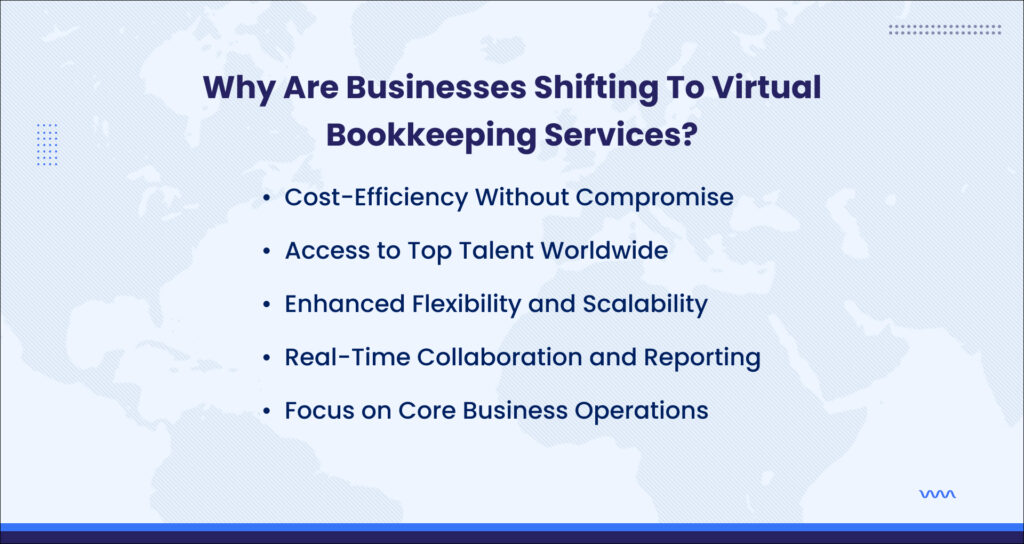
The traditional approach to bookkeeping served businesses well for decades, but as the global economy becomes increasingly digital, companies are rethinking how they manage their financial operations. Virtual bookkeeping services are emerging as a preferred solution for modern businesses seeking efficiency, adaptability, and cost-effectiveness. Here’s why:
1. Cost-Efficiency Without Compromise
Hiring in-house bookkeepers often means significant overhead costs, including salaries, benefits, training, and office space. Virtual bookkeeping eliminates these expenses, offering a more flexible pricing model.
- Flexible Pricing: Most virtual bookkeepers offer hourly rates, flat fees, or subscription plans tailored to the services you need.
- Savings on Infrastructure: There’s no need for dedicated office space, physical storage, or expensive accounting software—virtual bookkeepers use cloud-based tools that are often included in their services.
2. Access to Top Talent Worldwide
To stay on top of their finances, real estate agents must adopt effective bookkeeping practices. These practices not only help ensure accurate record-keeping but also make tax season smoother and more predictable. Here are some key bookkeeping practices every real estate agent should follow:
Separate Personal and Business Finances
One of the most significant advantages of virtual bookkeeping is the ability to access a global pool of highly skilled professionals.
- Industry-Specific Expertise: Virtual bookkeepers often specialize in particular industries, ensuring they understand unique regulatory and operational challenges.
- Global Standards Compliance: Businesses operating in multiple countries benefit from bookkeepers well-versed in international accounting practices and tax laws.
3. Enhanced Flexibility and Scalability
Virtual bookkeeping adapts to the changing needs of your business.
- On-Demand Support: Whether you need help reconciling accounts monthly or managing year-end tax preparation, services can be scaled up or down.
- Seasonal Adjustments: Businesses with fluctuating workloads, like retail or hospitality, can benefit from short-term or project-specific services without long-term commitments.
4. Real-Time Collaboration and Reporting
Cloud-based platforms allow virtual bookkeepers to provide updates and insights in real-time, helping businesses make data-driven decisions.
- Instant Access to Records: With everything stored securely in the cloud, financial data is accessible anytime, anywhere.
- Proactive Financial Management: Virtual bookkeepers can flag cash flow issues, payment delays, or potential compliance risks before they escalate.
5. Focus on Core Business Operations
By outsourcing bookkeeping tasks, businesses free up internal resources to focus on their core operations and growth strategies.
- Time Savings for Leadership: Executives and managers can shift their attention from administrative tasks to strategic initiatives.
- Improved Team Productivity: Teams can dedicate more energy to innovation and customer engagement rather than managing financial paperwork.
Virtual bookkeeping isn’t just a cost-saving measure; it’s a strategic choice for businesses that prioritize efficiency and scalability. By adopting this modern approach, companies position themselves to navigate financial complexities with greater ease and confidence.
The Future of Virtual Bookkeeping: Trends to Watch
As technology continues to advance, the landscape of virtual bookkeeping is evolving rapidly. Businesses are increasingly turning to virtual bookkeepers to streamline operations, reduce overhead costs, and improve the accuracy of their financial records. Staying ahead of these trends will help you adapt to the changing landscape and maximize the benefits of virtual bookkeeping.
1. Automation and AI Integration
Automation has already begun to transform the accounting industry, and it’s expected to play an even larger role in the future of virtual bookkeeping. Artificial intelligence (AI) and machine learning algorithms are improving the efficiency of bookkeeping tasks such as data entry, invoice management, expense categorization, and financial forecasting. As these technologies become more sophisticated, they will further streamline bookkeeping processes, reducing time spent on routine tasks and improving the accuracy of financial data.
2. Cloud-Based Accounting Platforms Becoming the Norm
Cloud computing has already revolutionized the way businesses manage their finances, and this trend is set to continue. Cloud-based accounting platforms, such as QuickBooks Online, Xero, and FreshBooks, are becoming more advanced, offering a wider range of features and better integration with other business tools. With more businesses moving to the cloud, virtual bookkeepers who are proficient in these platforms will be in high demand.
3. Increased Focus on Cybersecurity and Data Protection
As businesses continue to shift to virtual bookkeeping, the importance of cybersecurity will increase. Virtual bookkeepers handle sensitive financial information, including tax records, banking details, and payroll data, which makes them prime targets for cyber threats. In response to this, virtual bookkeeping services will continue to adopt more robust cybersecurity measures, including encryption, multi-factor authentication, and secure cloud storage. Businesses will increasingly prioritize cybersecurity when selecting a virtual bookkeeping service, making it essential for bookkeepers to maintain a high standard of data protection.
4. Virtual Bookkeeping as Part of Integrated Financial Services
In the future, virtual bookkeeping will likely become a more integrated part of broader financial services. Rather than just handling basic bookkeeping tasks, virtual bookkeepers will play a key role in providing strategic financial advice, tax planning, and business forecasting. Many businesses are already turning to virtual bookkeepers not only for their bookkeeping needs but also for their expertise in financial analysis.
5. Remote Collaboration and Global Talent Pool
The shift to remote work, accelerated by the pandemic, has had a lasting impact on virtual bookkeeping. In the past, businesses may have been limited to hiring bookkeepers within a certain geographical area. Today, businesses can tap into a global talent pool of virtual bookkeepers, allowing them to choose from the best talent, regardless of location. This trend will continue as more businesses realize the advantages of hiring remote workers, including cost savings, access to specialized expertise, and increased flexibility.
6. Real-Time Financial Reporting and Dashboards
One of the most exciting developments in the future of virtual bookkeeping is the rise of real-time financial reporting and interactive dashboards. As cloud-based platforms become more sophisticated, businesses will be able to access live financial data at any time, making it easier to track key metrics, monitor cash flow, and make data-driven decisions. Virtual bookkeepers will use these tools to provide businesses with up-to-the-minute financial reports that can be accessed through intuitive dashboards. This real-time insight will allow businesses to respond more quickly to changing financial conditions, make adjustments as needed, and stay on top of their financial health.
As you can see, the future of virtual bookkeeping is filled with exciting opportunities and advancements. By staying ahead of these trends, businesses can ensure that their financial management remains efficient, secure, and aligned with the latest industry developments.
Challenges of Hiring a Virtual Bookkeeper
virtual bookkeeping offers undeniable advantages, the process of hiring the right professional or service While is not without its challenges. For businesses, especially those new to remote financial management, understanding these obstacles is crucial to making informed decisions.
1. Verifying Expertise and Credentials
When hiring remotely, it can be difficult to assess the qualifications and expertise of a potential bookkeeper.
- Lack of Face-to-Face Interaction: Unlike traditional hiring, where you can meet candidates in person, virtual hiring relies on virtual interviews, resumes, and online reviews, which may not always provide a full picture.
- Varying Certifications: Bookkeeping certifications and standards differ across countries, making it essential to confirm that the bookkeeper is well-versed in your jurisdiction’s financial regulations.
- Overstated Skills: Some candidates may exaggerate their expertise or proficiency in specific accounting software during the hiring process.
2. Data Security and Privacy Concerns
Sharing sensitive financial information online poses risks that must be carefully managed.
- Cybersecurity Threats: Hackers and data breaches can compromise your company’s financial data, leading to potential losses and reputational damage.
- Compliance with Data Regulations: Businesses must ensure that their virtual bookkeeper follows applicable data protection laws, such as GDPR (for European businesses) or HIPAA (for healthcare).
- Cloud Storage Risks: While cloud platforms are generally secure, improper use or lack of encryption can expose financial records.
3. Communication and Time Zone Barriers
Effective collaboration can be hindered by remote working dynamics.
- Delayed Responses: Different time zones can result in delayed communication, particularly during urgent financial matters.
- Miscommunication Risks: Written communication via email or chat can lead to misunderstandings, especially when discussing complex financial data.
- Language Barriers: Working with a global pool of professionals increases the likelihood of language or cultural misunderstandings.
4. Integrating with Existing Systems
Every business has unique systems and processes, and ensuring seamless integration with a virtual bookkeeper can be challenging.
- Software Compatibility Issues: Not all virtual bookkeepers are familiar with your preferred accounting software, which could require additional training or adjustments.
- Workflow Misalignment: Virtual bookkeepers may have their own methods for managing finances, which might conflict with your company’s existing practices.
- Onboarding Delays: Time spent onboarding a virtual bookkeeper can slow down initial productivity.
5. Evaluating Long-Term Fit
Selecting a virtual bookkeeper isn’t just about their technical abilities; it’s also about finding someone who aligns with your business goals and values.
- Short-Term Mindset: Some professionals prioritize quick fixes over developing a deep understanding of your business.
- High Turnover: Virtual bookkeepers working as freelancers may juggle multiple clients, increasing the risk of turnover or inconsistent availability.
Key Benefits of Virtual Bookkeeping Services
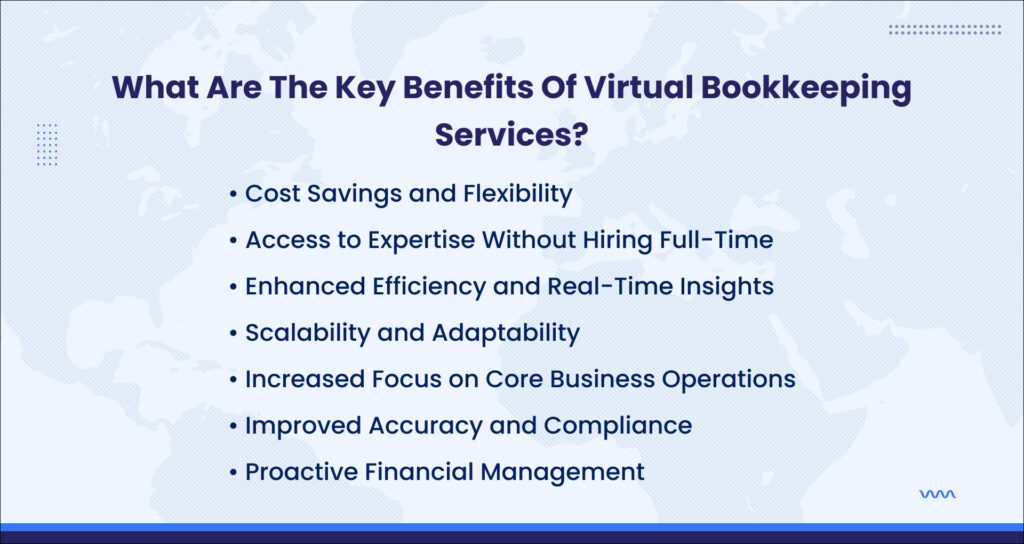
Choosing virtual bookkeeping over traditional in-house bookkeeping services comes with a range of advantages for businesses. These benefits go beyond just cost savings and convenience, impacting the strategic flexibility, efficiency, and growth potential of your business. In this section, we’ll explore how virtual bookkeeping can help your company scale and manage its finances more effectively.
Cost Savings and Flexibility
One of the most obvious benefits of virtual bookkeeping services is the reduction in costs. Traditional in-house bookkeepers come with significant overheads such as salaries, benefits, office space, and training expenses. By outsourcing bookkeeping tasks to virtual bookkeepers, businesses avoid these costs while still gaining access to high-quality financial services.
Access to Expertise Without Hiring Full-Time
Finding highly skilled bookkeepers who also fit into your company’s culture can be a challenge, especially for small or growing businesses. Virtual bookkeeping services allow you to access a broad pool of talent without the constraints of geographic location. This enables businesses to hire top-tier experts with specialized knowledge in areas such as tax law, compliance, and industry-specific financial management.
Enhanced Efficiency and Real-Time Insights
A significant advantage of using virtual bookkeeping services is the ability to get real-time access to financial data and insights. Traditional bookkeeping often involves waiting for periodic updates, which can delay decision-making. With virtual bookkeeping, financial data is constantly updated and available at your fingertips
Scalability and Adaptability
As your business grows, so does the complexity of managing its finances. Virtual bookkeeping services provide the scalability needed to accommodate this growth. Whether your company is expanding into new markets, launching new products, or scaling its operations, virtual bookkeepers can adapt to your evolving financial needs. This flexibility makes it easy to add or reduce services as your business grows or faces fluctuations in demand.
Increased Focus on Core Business Operations
Outsourcing bookkeeping tasks to virtual professionals allows business owners and managers to focus on what matters most: running and growing the business. Instead of spending valuable time managing financial details, leadership can redirect their efforts toward strategic decision-making, customer engagement, product development, and other core activities. This shift in focus leads to more efficient operations, better long-term planning, and an increased ability to drive business success.
Improved Accuracy and Compliance
Virtual bookkeeping services are designed to minimize errors and ensure compliance with financial regulations. Since these services specialize in financial management, they stay up-to-date with the latest tax laws, accounting standards, and industry best practices. Virtual bookkeepers also use advanced tools to automate repetitive tasks, reducing the likelihood of human error.
Proactive Financial Management
Virtual bookkeepers don’t just perform routine tasks—they actively monitor your financial health and provide valuable insights. With their expertise, they can identify potential financial issues, such as cash flow problems or underperforming areas, before they become significant challenges. They can also recommend strategies to optimize your financial processes, improve profitability, and reduce unnecessary expenses. This proactive approach helps businesses stay ahead of potential issues and maintain financial stability in the long term.
How to Evaluate a Virtual Bookkeeping Service?
Selecting the right virtual bookkeeping service is a critical decision that impacts your financial health and overall business efficiency. To ensure you choose a service provider that aligns with your business needs, follow these steps:
1. Define Your Business Needs
Before beginning your search, it’s crucial to identify exactly what you require from a virtual bookkeeping service.
- Scope of Services: Are you looking for basic data entry, account reconciliation, tax preparation, or comprehensive financial management?
- Industry-Specific Needs: Consider whether your business operates in a niche sector that requires specialized bookkeeping knowledge, such as healthcare, real estate, or legal services.
- Volume of Work: Estimate the frequency and volume of transactions to determine the level of support you need, whether part-time, full-time, or on an ad-hoc basis.
2. Research and Compare Service Providers
A comprehensive research phase ensures you’re making an informed decision.
- Online Reviews and Ratings: Platforms like Google Reviews, Clutch, or specialized accounting directories provide insights into the experiences of other businesses.
- Portfolio and Case Studies: Look for examples of how the provider has solved bookkeeping challenges for businesses similar to yours.
- Client Testimonials: Read or request feedback from past or current clients to gauge reliability and quality of service.
3. Look for Certifications and Expertise
A qualified bookkeeper should have the credentials and experience to handle your financial tasks accurately.
- Certifications: Ensure the bookkeeper holds relevant certifications like Certified Bookkeeper (CB), QuickBooks ProAdvisor, or Chartered Professional Accountant (CPA).
- Software Proficiency: Verify their expertise with tools like Xero, QuickBooks Online, or Sage, as well as familiarity with integrations your business uses (e.g., inventory management software or CRMs).
- Experience in Your Industry: Industry-specific expertise ensures they understand unique compliance requirements and operational challenges.
4. Conduct Interviews or Initial Consultations
A direct conversation can reveal important insights about their approach and compatibility with your business.
- Ask Targeted Questions: Focus on how they’ve managed similar clients, their approach to problem-solving, and how they handle tax deadlines or audit preparation.
- Assess Communication Style: Ensure they communicate clearly and proactively, especially since you’ll be collaborating remotely.
- Test Responsiveness: Gauge their availability and willingness to adapt to your preferred communication methods and time zones.
5. Request a Trial Project
A trial period is a low-risk way to evaluate the bookkeeper’s capabilities.
- Assign a Task: Start with a small, clearly defined project, such as reconciling accounts for a single month or generating a financial report.
- Evaluate Quality and Timeliness: Observe their attention to detail, ability to meet deadlines, and adherence to your specific instructions.
- Assess Workflow Integration: Determine how smoothly they align with your existing systems and team.
6. Prioritize Security and Compliance
Financial data is highly sensitive, making security non-negotiable.
- Verify Data Protection Measures: Ask about the platforms they use, data encryption protocols, and compliance with data privacy regulations like GDPR or CCPA.
- Discuss Backup Policies: Ensure they maintain regular backups of financial data to prevent loss in case of system failures.
- Request NDAs: Protect your business by signing a Non-Disclosure Agreement to safeguard confidential information.
7. Analyze Pricing and Value
While cost is important, the cheapest option isn’t always the best.
- Compare Pricing Models: Evaluate whether they charge hourly, by project, or on a subscription basis.
- Look for Transparent Pricing: Ensure there are no hidden fees and that pricing aligns with the services offered.
- Assess ROI: Consider the long-term value they bring through improved financial insights, compliance, and cost savings.
How to Measure the Success of Your Virtual Bookkeeping Service?
Once you’ve successfully transitioned to virtual bookkeeping, it’s essential to have a system in place to measure the success of the service you’re receiving. Tracking the effectiveness of your virtual bookkeeping ensures that you’re getting the value you expect and that your financial management needs are being met.
1. Financial Accuracy and Timeliness
The most critical measure of success for any bookkeeping service is financial accuracy. If your virtual bookkeeper is providing timely, accurate reports, then they are fulfilling their core responsibility. To assess accuracy, regularly review financial reports such as balance sheets, profit and loss statements, and cash flow statements. Compare them with your internal records and ensure that everything matches up.
2. Proactive Financial Advice
A good virtual bookkeeper doesn’t just handle the numbers—they provide proactive financial advice. They should be able to spot financial trends, suggest cost-saving measures, and offer strategic insights to help you improve your financial performance.
3. Reporting Accuracy and Consistency
Another key success metric is the accuracy and consistency of the reports you receive. A high-quality virtual bookkeeping service will offer clear, consistent financial reporting that aligns with your company’s goals and timeline. This means that every month, quarter, or year, you should receive reports that are easy to understand, organized, and aligned with your business objectives.
4. Cost Savings and Return on Investment (ROI)
One of the main reasons businesses switch to virtual bookkeeping services is to save on costs. However, the value of virtual bookkeeping should not just be measured in terms of direct cost savings. You should also consider the return on investment (ROI) your business is receiving from the service. This includes evaluating how the financial insights and time savings have contributed to your ability to focus on core business activities, drive growth, and make strategic decisions.
5. Compliance and Risk Management
Compliance with tax laws, accounting standards, and industry regulations is essential to avoid legal penalties, fines, or reputational damage. A successful virtual bookkeeping service will ensure that your business remains in compliance with all applicable financial regulations and standards. This includes proper handling of taxes, payroll, and any other financial obligations. Periodic audits, tax filings, and document management should be part of your virtual bookkeeper’s responsibilities to ensure your business stays on track.
6. Client and Vendor Relationship Management
While bookkeeping primarily focuses on managing financial data, a high-quality virtual bookkeeper should also help improve relationships with clients and vendors. For example, by maintaining accurate billing and invoicing systems, they can ensure that invoices are sent promptly, reducing delays in payments.
7. Flexibility and Adaptability
As your business grows or experiences changes, your financial management needs may evolve. Your virtual bookkeeping service should be flexible enough to accommodate these changes. For example, if you launch new products or expand into new markets, your bookkeeping needs may become more complex. A great virtual bookkeeper will be able to adapt to these changes and provide the necessary support to manage your growing financial requirements.
8. Customer Satisfaction
Finally, one of the most straightforward ways to measure success is by assessing your own satisfaction with the service. Are you receiving the support and communication you need from your virtual bookkeeper? Do you feel confident in the accuracy and timeliness of their work? Regular feedback and communication with your virtual bookkeeper are essential to ensure that you’re getting the value you expect. If your bookkeeper is responsive, attentive to your needs, and delivers consistent, high-quality work, it’s a clear sign that they’re adding value to your business.
Why You Should Schedule a Meeting with The Pro Accountants?
As we’ve seen throughout this guide, virtual bookkeeping is not just about handling numbers; it’s about transforming how your business makes financial decisions, stays compliant, and drives growth. The future of virtual bookkeeping holds enormous potential, and businesses that embrace it now will be positioned to thrive in the years ahead.
Moreover, you need a partner who understands your industry, can provide real-time insights, and is committed to your business’s financial success. This is where The Pro Accountants can make a difference.
We don’t just offer bookkeeping services—we become an integral part of your business’s financial strategy. With our team of experienced professionals and cutting-edge technology, we provide tailored virtual bookkeeping solutions that align with your specific needs. So, let us help you streamline your finances, reduce stress, and gain valuable insights that will drive your business forward. Schedule a consultation with us today!
Bookkeeping is often overlooked by real estate agents, yet it plays a crucial role in maintaining a healthy business. As a real estate agent, you’re juggling multiple clients, transactions, and income streams to make it easy for finances to become disorganized.
Without a solid bookkeeping system in place, you may struggle with staying on top of tax obligations, managing cash flow, and ensuring that you’re maximizing your earnings. This is particularly concerning because real estate agents face unique financial challenges—primarily irregular income, frequent commission-based payments, and numerous expenses that can easily spiral out of control.
The truth is, without proper bookkeeping, you risk losing track of valuable deductions, mismanaging funds, and, worst of all, finding yourself in trouble with tax authorities. From keeping receipts for office supplies and travel expenses to calculating commissions or tax deductions, effective bookkeeping allows real estate agents to focus on what they do best—closing deals—while ensuring that their financial records are in order.
In this blog, we’ll walk you through the essential practices every real estate agent needs to follow to keep their finances on track.
Why is Bookkeeping Essential for Real Estate Agents?
Real estate agents often operate in a dynamic environment where every deal can lead to a significant financial impact. Unlike salaried employees, agents typically work on commission, meaning their income can fluctuate drastically depending on the number of transactions they close in a given month. This makes accurate bookkeeping not just important but essential for real estate professionals to maintain financial stability and ensure that all earnings are properly tracked.
One of the biggest challenges faced by real estate agents is the irregularity of their income. Commissions may come in bursts, often following long periods without a sale. Without proper bookkeeping practices, it’s easy to lose track of how much you’ve earned or how much you owe in taxes. Therefore, this can lead you to potential cash flow problems. That is why, you need to regularly update your financial records to ensure that you are managing your income and expenses effectively.
Moreover, real estate agents often incur a wide range of business expenses that must be carefully tracked to optimize tax deductions. These expenses can include things like:
- Marketing costs
- Office supplies
- Transportation to showings
- Meals or entertainment when meeting clients.
Without keeping detailed records, agents may miss out on valuable deductions, potentially resulting in paying more in taxes than necessary. Bookkeeping helps you identify these expenses, categorize them correctly, and ensure that you’re only paying what you owe.
Lastly, keeping your financials organized throughout the year is essential for tax purposes. Real estate agents, like any self-employed individuals, must file taxes quarterly and annually. Having clean, well-maintained books ensures that when it comes time to file, there are no surprises. Accurate records also make it easier to work with accountants, ensuring they can help you maximize your returns or minimize your liabilities based on up-to-date and accurate financial data.
Common Financial Challenges Real Estate Agents Face
Real estate agents encounter a variety of financial challenges, many of which are unique to the profession. The unpredictable nature of commission-based income, coupled with a high volume of transactions, can quickly overwhelm even the most diligent agent without the right financial management practices in place. Understanding these challenges is the first step toward addressing them effectively.
These challenges include:
Managing Inconsistent Income
- Real estate agents rely on commission-based income, which fluctuates based on the deals they close.
- This can result in months of high earnings followed by periods of little or no income, creating cash flow problems if not properly managed.
- Regularly tracking earnings and budgeting for lean months is crucial to maintaining financial stability.
Tracking Commission-Based Income
- Commissions are often split with brokers and other agents, which can lead to confusion over how much is earned and owed.
- Multiple deals with varying commission rates and adjustments make it difficult to track payments accurately.
- A well-organized bookkeeping system helps agents track each transaction and ensure they are paid correctly for every deal.
Managing Business Expenses
- Real estate agents incur a variety of business expenses such as marketing costs, travel, client dinners, and office supplies.
- Without proper bookkeeping, it’s easy to overlook expenses or fail to categorize them correctly.
- Effective bookkeeping helps agents track expenses, ensuring they understand their profitability and are ready for tax season.
Navigating Complex Taxes
- As self-employed individuals, agents must handle both income tax and self-employment taxes (Social Security and Medicare contributions).
- Keeping track of quarterly estimated tax payments, deductions, and credits can be overwhelming.
- A reliable bookkeeping system helps agents stay on top of their tax obligations and avoid penalties or surprises at year-end.
Key Bookkeeping Practices for Real Estate Agents
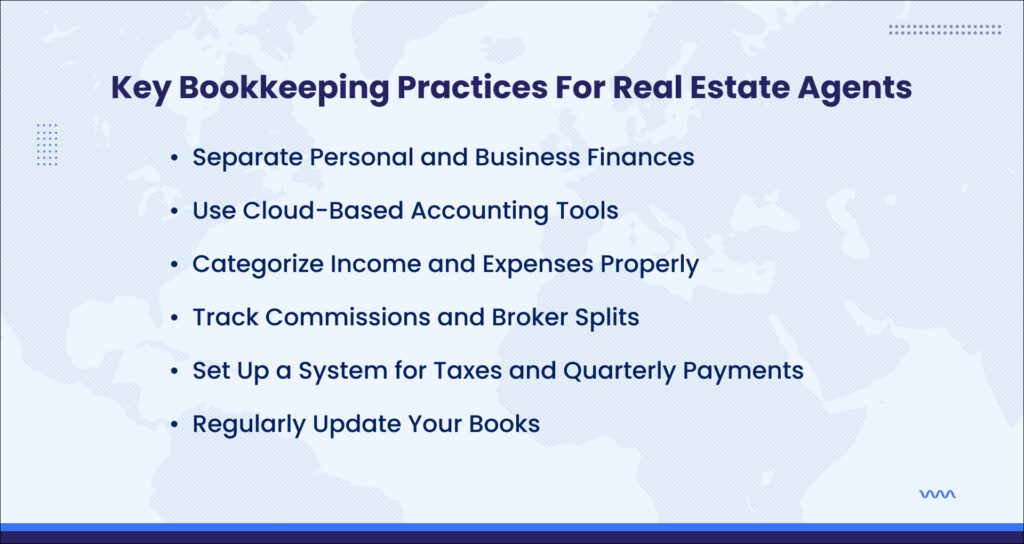
To stay on top of their finances, real estate agents must adopt effective bookkeeping practices. These practices not only help ensure accurate record-keeping but also make tax season smoother and more predictable. Here are some key bookkeeping practices every real estate agent should follow:
Separate Personal and Business Finances
- Mixing personal and business finances is a common mistake, but it makes bookkeeping much more complicated.
- Opening a separate business account ensures that business expenses, income, and tax obligations are distinct from personal finances.
- This separation also provides a clear picture of your business’s profitability and makes tax filings easier.
Use Cloud-Based Accounting Tools
- Cloud-based accounting software such as QuickBooks, Xero, or FreshBooks allows agents to manage finances from anywhere.
- These tools can automate many bookkeeping tasks, such as categorizing transactions, sending invoices, and tracking payments.
- With cloud-based systems, agents can stay organized and ensure their financial data is always up to date and accessible.
Categorize Income and Expenses Properly
- Proper categorization of income and expenses is vital for accurate reporting and tax preparation.
- For example, income should be categorized based on the type of transaction—whether it’s commission from a sale, referral fees, or other sources.
- Expenses should be categorized as either business-related (marketing, office supplies, etc.) or personal (if any personal expenses are mixed).
- Clear categories help agents track their financial performance and identify potential deductions during tax season.
Track Commissions and Broker Splits
- Real estate agents often split commissions with brokers or other agents.
- It’s crucial to track these splits accurately to ensure agents know exactly how much they’re earning from each deal.
- Having a detailed breakdown of commissions can prevent errors when calculating earnings and help manage the financial impact of broker fees.
Set Up a System for Taxes and Quarterly Payments
- As self-employed individuals, real estate agents are responsible for paying quarterly estimated taxes.
- Setting aside a percentage of income for taxes, such as 25-30%, helps prevent financial strain when tax payments are due.
- A good bookkeeping system should track tax payments, making it easier to calculate how much is owed each quarter.
Regularly Update Your Books
- Keeping your books up to date is essential for making informed business decisions.
- Setting aside time each week or month to update your records ensures that you are always on top of your finances and helps prevent backlog.
- Regular updates also make it easier to identify discrepancies, allowing for faster correction before they become major issues.
Leveraging Technology for Better Bookkeeping
Gone are the days of manually tracking every transaction in spreadsheets or physical ledgers. With the advent of cloud-based accounting software and other digital tools, agents now have access to powerful resources that can save time.
Cloud-based accounting platforms like QuickBooks, Xero, and FreshBooks are particularly beneficial for real estate agents because they provide a centralized, real-time overview of their financials. These platforms automatically sync with your bank accounts and credit cards, categorizing transactions as they occur.
Moreover, many of these tools come with specialized features designed for the real estate industry. For example, QuickBooks offers a feature that can track commission-based income and automatically calculate how much is owed from each sale. Xero also integrates with property management systems. By using these platforms, agents no longer have to manually calculate commissions.
Another advantage of using technology for bookkeeping is the ability to easily generate reports. With just a few clicks, agents can access detailed financial reports that provide insights into their business performance. These reports can include:
- Profit and loss statements
- Balance sheets
- Cash flow statements
- Tax report
Real estate agents can use these reports to identify trends, make informed decisions about their business operations, and prepare for tax season without scrambling to gather data at the last minute.
Lastly, technology allows for collaboration with other professionals, such as accountants or financial advisors. Cloud-based systems enable agents to share their financial data securely with their accounting team, allowing for real-time updates and eliminating the need for back-and-forth emails or physical document exchanges. This collaborative approach can lead to more accurate financial reporting and better planning, as accountants can offer advice based on up-to-date financial data rather than outdated records.
The Importance of Working with a Professional Accountant
While real estate agents can handle much of their bookkeeping themselves, working with a professional accountant brings significant advantages, especially when it comes to managing complex financial situations.
Accountants offer expertise and knowledge that can save agents time, reduce tax liabilities, and prevent costly errors. They are also invaluable when it comes to planning for long-term financial goals and ensuring that an agent’s business remains financially healthy and compliant with tax regulations.
One of the main benefits of working with an accountant is their ability to ensure compliance with tax laws. The tax laws that apply to real estate agents can be complex and are subject to frequent changes. A professional accountant is well-versed in these laws and can ensure that agents are complying with all relevant regulations. They will help identify any potential tax issues before they become problems, preventing fines or audits.
Accountants also provide valuable insights into financial planning. By reviewing an agent’s books and financial situation, they can offer advice on ways to save money, reduce expenses, and maximize income. For instance, an accountant may suggest strategies for tax savings, such as setting up a retirement account or taking advantage of other tax-efficient investment options. They can also assist with creating long-term financial plans that align with an agent’s business goals, whether it’s saving for retirement, expanding the business, or preparing for large expenditures.
Another key advantage of working with an accountant is their ability to optimize deductions. Real estate agents are eligible for numerous tax deductions, but many agents overlook potential deductions or fail to categorize expenses correctly. A professional accountant is experienced at identifying eligible deductions and ensuring that they are properly documented and claimed. This can result in significant tax savings over time. Furthermore, an accountant can advise agents on the most tax-efficient way to structure their business, helping them reduce their overall tax liability.
Accountants can also be a crucial resource for financial forecasting and budgeting. Many real estate agents struggle with cash flow management due to the irregular nature of commission-based income. An accountant can help agents forecast their income and expenses, allowing them to plan for lean months and avoid financial instability. They can also assist in creating a realistic budget that accounts for both personal and business expenses, helping agents stay financially on track.
Finally, working with an accountant allows real estate agents to focus on growing their business. By delegating the financial and tax-related tasks to a professional, agents can spend more time on activities that directly contribute to their success, such as building relationships with clients, marketing properties, and closing deals. This not only increases productivity but also provides peace of mind, knowing that their financial affairs are in capable hands.
In conclusion, while bookkeeping is a critical part of a real estate agent’s business, working with a professional accountant offers numerous benefits. From ensuring tax compliance and optimizing deductions to providing financial planning advice and forecasting, an accountant plays a vital role in keeping an agent’s finances on track. By outsourcing accounting and tax duties to an expert, real estate agents can focus on what they do best—serving their clients and growing their business.
How to Handle Real Estate Commissions in Your Bookkeeping?
Real estate commissions are a key source of income for agents, but managing them in bookkeeping requires careful attention to detail. Because commissions can vary significantly from deal to deal, it’s essential to track them accurately to avoid financial confusion.
The first step in handling commissions is to document each transaction immediately. As soon as a deal closes and a commission is earned, make sure to record the amount, client information, and the date it was received. This allows you to keep track of your income as it flows in and ensures that nothing is missed.
Since commissions are typically paid after a deal is completed, it’s also important to plan for delays in payment. While you may have earned a commission, it may take weeks or even months for the payment to arrive. This delay can create cash flow challenges, especially if you’re relying on that income to cover other business expenses. By maintaining a separate savings account for commissions, you can keep your operating funds and commission payments separate and avoid cash flow issues.
In addition to tracking commissions, you should also account for commission splits if you work with a brokerage or partner. These splits can impact your bottom line, so it’s important to track your gross commission income as well as the net amount you receive after any splits. Keeping a detailed record of all splits will help ensure that your bookkeeping is accurate and reflect the true income you earn.
Finally, when it comes to taxes, commissions should be treated as self-employment income and reported as such on your tax returns. Since you are likely working as an independent contractor, it’s essential to set aside a portion of your commission income for taxes. Many agents make quarterly estimated tax payments to avoid a large tax bill at the end of the year.
By staying organized and diligent in tracking commissions, you ensure that your income is accurately represented, your cash flow is managed, and your tax obligations are met without surprises.
Keep Your Real Estate Finances on Track with Professional Help
If you have come across this far, you must understand now the importance of accurate bookkeeping, tax planning, and the right tools to maintain financial stability. Whether it’s handling commissions, tracking expenses, or planning for taxes, every aspect of your financial management should be approached with care and precision.
By working with experts like The Pro Accountants, you can ensure that your finances are well-managed, compliant, and optimized for growth. Our team specializes in providing personalized bookkeeping services tailored to the needs of real estate agents, so you can focus on what you do best—closing deals and growing your business.
Don’t let your finances hold you back from reaching your full potential. Schedule a meeting with The Pro Accountants today, and let us help you streamline your bookkeeping and take your real estate business to the next level.
Frequently Asked Questions
Why is bookkeeping important for real estate agents?
Bookkeeping helps real estate agents track income and expenses, manage cash flow, stay compliant with tax laws, and make informed business decisions. Accurate financial records are essential for avoiding tax issues, maintaining profitability, and ensuring long-term business success.
What expenses can real estate agents deduct from their taxes?
Real estate agents can deduct a variety of business-related expenses, including vehicle costs (mileage or actual expenses), home office expenses, marketing and advertising costs, professional fees (e.g., licensing, continuing education), and client-related expenses like meals and entertainment, subject to IRS rules.
How do I track my real estate commissions in bookkeeping?
You should record your commission income as soon as the deal closes, ensuring to separate gross commissions from your net income after any splits. Maintaining detailed records of each transaction will ensure that all commissions are accounted for, whether or not they’ve been received.
What tools can I use to simplify my real estate bookkeeping?
Tools like QuickBooks, Xero, FreshBooks, and Wave are popular among real estate agents. These platforms help you track income and expenses, generate reports, and stay organized. Many offer integrations with other tools like CRM systems, making it easier to manage your entire business workflow.
How can I manage irregular income as a real estate agent?
Since commissions vary, it’s important to create a budget that accounts for fluctuating income. Consider saving a percentage of your income each month to cover slow periods. A dedicated savings account for commissions can help smooth out cash flow issues and ensure you’re prepared for expenses.
Do I need a separate business bank account for my real estate business?
Yes, it’s highly recommended to have a separate business bank account to keep personal and business finances distinct. This makes it easier to track income and expenses, reduces the risk of mixing personal and business funds, and simplifies tax reporting.
What is the best way to handle taxes as a real estate agent?
As a self-employed individual, real estate agents are responsible for paying self-employment taxes, which include Social Security and Medicare taxes. It’s advisable to set aside a portion of each commission for taxes and to make quarterly estimated tax payments to avoid a large tax bill at year-end.
Can I claim deductions for marketing and advertising expenses?
Yes, expenses related to marketing your real estate business are deductible. This includes costs for digital ads, website maintenance, business cards, promotional materials, and other marketing strategies aimed at generating new clients and deals.
How often should I review my finances as a real estate agent?
Regular financial reviews are crucial for staying on top of your business’s health. Aim to conduct a financial review at least quarterly, though monthly reviews can provide more insight into cash flow and expenses. This allows you to catch potential issues early and make adjustments as needed.
Can I outsource my bookkeeping as a real estate agent?
Yes, many real estate agents choose to outsource their bookkeeping to professional accountants or bookkeeping services. Outsourcing can save time and reduce stress, allowing you to focus on clients and sales while ensuring your financial records are accurate and up to date.
With financial management playing a vital role in maintaining client trust and sustaining business growth, law firms must ensure their bookkeeping practices are accurate and transparent.
Unlike general businesses, law firms face unique financial challenges. From managing trust accounts to ensuring compliance with strict legal regulations, a minor oversight can lead to severe consequences, including financial penalties and reputational damage. Yet, bookkeeping often takes a backseat as firms prioritize client representation and case management.
In this blog, we’ll dive into the essentials of law firm bookkeeping, unravel the challenges unique to the legal sector, and provide actionable tips to set your firm up for success. Whether you’re managing a small practice or overseeing the financials of a large firm, these insights will help you streamline your processes, maintain compliance, and focus on what you do best—serving your clients.
Understanding Law Firm Bookkeeping Basics
Bookkeeping for law firms involves more than just tracking income and expenses—it’s about maintaining compliance with legal industry regulations while ensuring the financial health of the firm. To avoid legal penalties and reputational harm, law firms must adhere to strict standards, particularly when managing trust accounts and handling client funds.
What is Law Firm Bookkeeping?
At its core, law firm bookkeeping is the process of systematically recording, organizing, and managing the financial transactions of a legal practice. However, what sets it apart is the need to align these practices with stringent legal and ethical standards. These standards govern how client funds are handled, how financial records are maintained, and how compliance is demonstrated to regulators.
For instance, lawyers often deal with client retainers deposited into trust accounts, which must be managed separately from the firm’s operational funds. This separation is vital to prevent misuse or commingling of funds—a violation that could result in penalties, suspension, or even disbarment.
In addition, law firms must track revenue differently than standard businesses. Revenue often depends on case outcomes, which means income cannot always be recognized immediately. A robust bookkeeping system ensures that firms adhere to accounting principles while meeting regulatory requirements.
- Trust accounts, often referred to as Interest on Lawyer Trust Accounts (IOLTA), are a hallmark of legal bookkeeping. These accounts are used to manage client funds for expenses like court fees, settlements, or retainers. Mishandling trust accounts—even inadvertently—can lead to severe legal repercussions.
For example, if a firm accidentally uses funds from a trust account to cover operational expenses, this would be considered a breach of trust account regulations. Proper bookkeeping ensures that every transaction is accurately recorded and reconciled.
- Unlike many businesses that recognize revenue upon providing a service or delivering a product, law firms often work on cases where revenue is contingent upon milestones or final outcomes. For instance, contingency cases don’t generate revenue until a settlement or judgment is reached. Accurate bookkeeping helps firms track these nuances and avoid premature income reporting.
- Legal firms incur specific types of expenses such as filing fees, deposition costs, and legal research tools (e.g., LexisNexis or Westlaw). Categorizing these expenses properly is crucial for tax reporting and financial analysis. Misclassification can lead to overpayment of taxes or reduced profitability.
Legal billing relies heavily on tracking time. Distinguishing between billable hours (direct client work) and non-billable hours (administrative tasks, training) is essential for evaluating productivity and profitability.
The Importance of Compliance
One of the most critical aspects of law firm bookkeeping is compliance. Failing to comply with legal and financial regulations can lead to dire consequences. For example:
- Mismanagement of client trust accounts can result in fines, suspensions, or disbarment.
- Inaccurate financial reporting can trigger audits or investigations, damaging the firm’s reputation.
By keeping detailed and accurate records, law firms demonstrate their commitment to ethical practices. Moreover, well-maintained financial records protect against disputes with clients, regulators, or employees.
Common Challenges in Law Firm Bookkeeping
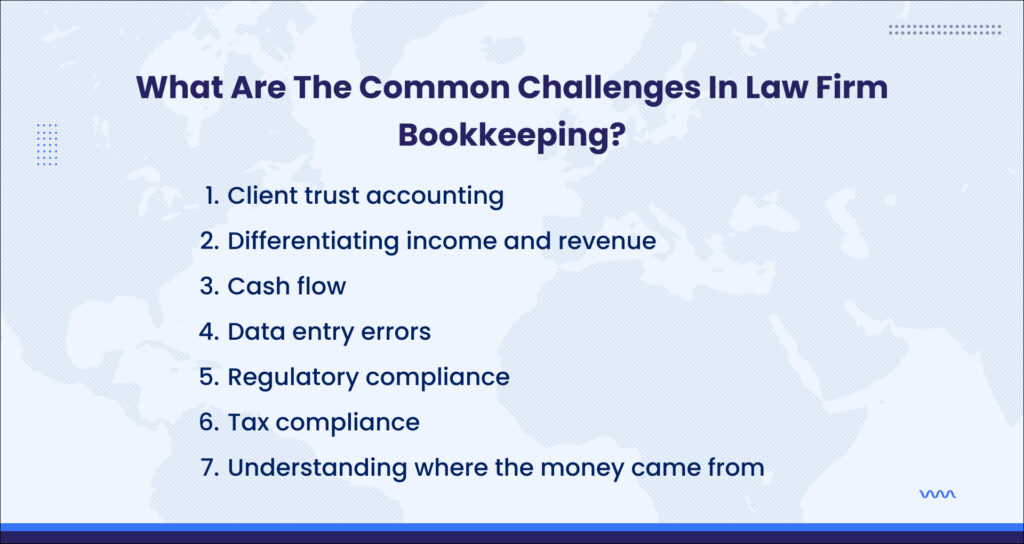
Bookkeeping for law firms comes with unique hurdles that can create significant operational and compliance risks if not managed correctly. These challenges often stem from the industry’s specialized requirements, such as:
- Trust accounting
- Billable hours tracking
- Compliance with regulatory frameworks.
Differentiating Between Operating and Trust Funds
While trust accounts manage client-specific funds, operating accounts handle the firm’s day-to-day expenses, such as salaries, utilities, and marketing. Keeping these funds distinct is not just a best practice but a legal requirement.
Challenges:
• Complex Transactions:
Lawyers often withdraw earned fees from trust accounts, requiring clear documentation to prevent errors.
• Regulatory Scrutiny:
Operating and trust funds are closely monitored by regulators. Mismanagement, even unintentionally, can trigger audits and fines.
Tracking Billable vs. Non-Billable Hours
Billable hours are the backbone of a law firm’s revenue, while non-billable hours reflect internal tasks such as administrative work or training. Differentiating and documenting these hours is essential for accurate client billing and productivity analysis.
Challenges:
• Time Leakage:
Without robust time-tracking systems, firms may underreport billable hours, leading to revenue loss.
• Disorganized Records:
A lack of clarity in timekeeping can result in client disputes or delayed payments.
Expense Categorization and Allocation
Legal firms deal with various expenses, including court fees, expert witness fees, and research subscriptions. Properly categorizing and allocating these expenses is crucial for tax purposes and financial analysis.
Challenges:
• Complex Expense Structures:
Some expenses, such as shared case costs, need to be divided among multiple clients or cases.
• Tax Implications:
Misclassified expenses can lead to inaccurate tax filings, overpayments, or missed deductions.
Staying Audit-Ready
Law firms are often subject to audits from bar associations or tax authorities. Inconsistent or incomplete records can make the audit process stressful and increase the risk of penalties.
Challenges:
• Inconsistent Record-Keeping:
Many firms lack a standardized process for recording transactions, leading to gaps or inaccuracies.
• Stressful Audit Preparation:
Preparing for an audit without comprehensive financial records can divert resources away from client work.
Actionable Strategies for Effective Bookkeeping in Law Firms
Addressing the unique challenges of law firm bookkeeping requires a strategic and tailored approach. By implementing modern tools, adopting best practices, and ensuring compliance with legal regulations, law firms can streamline their financial processes and focus on delivering value to their clients. Below are actionable strategies to optimize your law firm’s bookkeeping.
1. Leverage Legal-Specific Bookkeeping Software
Investing in software designed for law firms simplifies bookkeeping by automating tasks, ensuring compliance, and providing detailed financial insights.
Benefits:
- Trust Accounting Management: Tools like Clio Manage and QuickBooks for Lawyers offer features specifically for tracking client funds in trust accounts.
- Time Tracking Integration: Many software solutions integrate with time-tracking tools, ensuring accurate billing for all hours worked.
- Customizable Reporting: Generate financial reports tailored to your firm’s needs, aiding in decision-making.
Pro Tip: When choosing software, prioritize scalability to ensure it grows with your firm.
2. Implement Robust Time-Tracking Systems
Accurate time tracking is essential for maximizing billable hours and ensuring transparency in client billing.
Action Steps:
- Use cloud-based tools like Toggl or TimeSolv to track time spent on cases in real time.
- Train staff to log time daily, minimizing errors and forgotten entries.
- Regularly review time logs to identify patterns and improve efficiency.
Impact: Firms that implement automated time tracking report up to 10% increased revenue due to accurate billing.
3. Regularly Reconcile Accounts
Reconciling trust and operating accounts monthly (or more frequently) ensures that all transactions are accounted for and discrepancies are addressed promptly.
Best Practices:
- Cross-check bank statements against your bookkeeping records to identify errors or unauthorized transactions.
- Use reconciliation tools provided by your accounting software to streamline the process.
- Document reconciliation efforts to maintain an audit trail.
Result: Consistent reconciliation reduces the risk of overdrafts and compliance violations.
4. Outsource to Legal Bookkeeping Professionals
Hiring professionals who specialize in law firm bookkeeping can save time and reduce errors.
Advantages:
- Expertise in Regulations: Legal bookkeepers understand bar association rules and trust accounting requirements.
- Focus on Core Activities: Outsourcing frees up attorneys to focus on legal work rather than administrative tasks.
- Scalability: External services can handle increased bookkeeping demands as your firm grows.
Did You Know? According to a survey, outsourcing bookkeeping reduces operational costs by an average of 40%.
5. Create a Chart of Accounts for Legal-Specific Expenses
A detailed chart of accounts tailored to law firms helps categorize expenses accurately and simplifies tax filing.
Categories to Include:
- Client Costs: Filing fees, expert witness payments, etc.
- Office Expenses: Rent, utilities, and office supplies.
- Professional Services: Marketing, consulting, and legal research subscriptions.
- Payroll: Salaries and benefits for attorneys and staff.
Action Step: Review and update your chart of accounts annually to reflect changes in your firm’s operations.
6. Schedule Regular Compliance Audits
Proactively auditing your financial processes ensures adherence to regulations and identifies areas for improvement.
Steps for Effective Audits:
- Perform an internal audit quarterly to review trust account management and expense categorization.
- Engage external auditors annually for an unbiased assessment.
- Address audit findings immediately to prevent recurring issues.
Outcome: Regular audits reduce the likelihood of penalties and improve financial accuracy.
7. Set Clear Billing Policies
Transparent billing practices enhance client trust and minimize disputes.
Strategies:
- Use itemized invoices to show a breakdown of services and costs.
- Establish payment terms upfront, including retainer agreements and due dates.
- Offer multiple payment options, such as credit card payments or online portals.
Example: A law firm that adopted clear billing policies reported a 20% decrease in late payments within six months.
8. Train Staff on Bookkeeping Basics
Empowering your team with bookkeeping knowledge reduces the risk of errors and enhances collaboration.
Training Focus Areas:
- Trust account regulations and compliance.
- Proper documentation of transactions and expenses.
- Efficient use of bookkeeping software.
Bonus Tip: Provide ongoing training to keep your team updated on new tools and regulations.
9. Monitor Cash Flow Proactively
Cash flow management is vital for maintaining financial stability, especially for firms operating on contingency fees.
Steps to Take:
- Use cash flow forecasting tools to anticipate periods of low revenue.
- Establish a cash reserve to cover fixed expenses during slow months.
- Follow up promptly with clients on overdue invoices.
Result: Proactive cash flow management reduces financial stress and ensures operational continuity.
10. Stay Updated on Regulatory Changes
Legal accounting rules and tax laws evolve regularly. Staying informed prevents non-compliance and potential fines.
How to Stay Updated:
- Subscribe to newsletters from your state bar association or legal accounting bodies.
- Attend workshops or webinars focused on legal bookkeeping.
- Partner with a professional service like The Pro Accountants, which monitors regulatory updates on your behalf.
Impact: Firms that prioritize compliance updates report fewer instances of penalties or client disputes.
Real-World Statistics:
- Trust Accounting Violations: A 2023 survey by American Bar Association revealed that 45% of disciplinary actions against lawyers stemmed from trust accounting mismanagement.
- Technology Adoption: As per LegalTech Insights, law firms using legal-specific software reported a 25% increase in operational efficiency compared to firms relying on manual processes.
Enhancing Profitability and Efficiency Through Strategic Bookkeeping
Effective bookkeeping is not merely a back-office function; it serves as the backbone of a profitable and sustainable law firm. By leveraging the strategies mentioned earlier, law firms can achieve financial clarity, boost operational efficiency, and ultimately enhance profitability. Below, we explore the measurable benefits of strategic bookkeeping practices.
1. Improved Financial Visibility
Accurate and timely bookkeeping provides a clear snapshot of your firm’s financial health.
How It Helps:
- Identify trends in revenue and expenses, enabling better financial planning.
- Monitor the profitability of individual cases by analyzing associated costs and billable hours.
- Ensure sufficient funds are available for upcoming expenses, such as payroll and office overheads.
Outcome: Better financial visibility empowers decision-makers to allocate resources effectively and invest confidently in growth opportunities.
2. Enhanced Client Trust Through Compliance
Adherence to legal and financial regulations builds trust with clients and stakeholders.
How It Helps:
- Transparent trust account management reassures clients that their funds are handled ethically and responsibly.
- Accurate and detailed invoices minimize billing disputes, fostering positive client relationships.
- Regular compliance audits reduce the risk of reputational damage from legal penalties.
Impact: Firms that prioritize compliance often report higher client retention rates and stronger referrals.
3. Streamlined Operations
Efficient bookkeeping reduces administrative burdens, allowing attorneys to focus on their core responsibilities.
How It Helps:
- Automated time-tracking and billing systems save hours of manual work each week.
- Outsourcing complex bookkeeping tasks frees up internal resources for strategic initiatives.
- Proactive cash flow management eliminates the stress of scrambling for funds during lean periods.
Result: Streamlined operations lead to a more productive and satisfied team, directly impacting client service quality.
4. Better Financial Decision-Making
Data-driven decisions are crucial for long-term success, and well-maintained financial records provide the foundation for such decisions.
How It Helps:
- Analyze profit margins by case type or practice area to focus on high-yield services.
- Set realistic revenue targets based on historical performance and industry benchmarks.
- Evaluate the financial impact of hiring additional staff or expanding into new markets.
Example: A mid-sized law firm used detailed financial reports to identify underperforming practice areas, reallocate resources, and increase overall profitability by 15% within a year.
5. Reduced Costs Through Preventive Measures
Proactive bookkeeping can help law firms save money by avoiding penalties, interest, and inefficiencies.
How It Helps:
- Early identification of billing errors reduces revenue leakage.
- Accurate categorization of expenses maximizes tax deductions and minimizes audit risks.
- Eliminating manual processes reduces overhead costs associated with labor-intensive tasks.
Result: Cost savings are reinvested into growth areas like marketing, technology, or staff development.
6. Increased Scalability
As your law firm grows, having robust bookkeeping systems in place ensures seamless scalability.
How It Helps:
- Advanced software and professional services can handle higher transaction volumes without compromising accuracy.
- Scalable processes support the addition of new practice areas, attorneys, or office locations.
- Financial insights from well-maintained records guide expansion decisions, reducing risk.
Outcome: Firms equipped with scalable bookkeeping practices grow more efficiently and maintain profitability during expansion.
Key Metrics to Monitor for Profitability
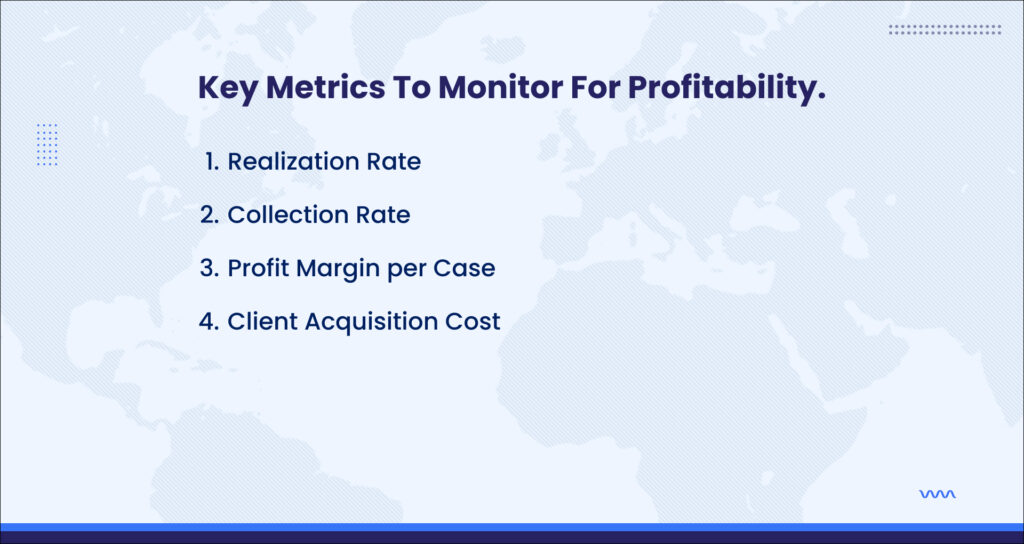
To evaluate the effectiveness of your bookkeeping strategies, regularly track these metrics:
- Realization Rate: Percentage of billable hours collected as revenue.
- Collection Rate: Proportion of invoices paid by clients on time.
- Profit Margin Per Case: Net profit earned from each legal matter.
Client Acquisition Cost: Expenses related to acquiring a new client versus the revenue they generate.
Agitating the Pain Points
Without strategic bookkeeping practices, law firms risk:
- Missed Growth Opportunities: Lack of financial data can hinder expansion or investment decisions.
- Revenue Leakage: Poor billing practices can result in undercharging or unpaid invoices.
- Reputation Damage: Compliance violations or client disputes can erode trust and lead to client loss.
Success Story
A small law firm struggling with inconsistent cash flow and trust account mismanagement sought professional bookkeeping services. Within six months, they:
- Improved cash flow by 30% through proactive billing and collections.
- Passed a state bar audit with no compliance issues.
- Expanded their practice areas, thanks to actionable financial insights.
This transformation highlights the direct correlation between effective bookkeeping and a firm’s success.
Why Law Firms Need Professional Bookkeeping Services
As we’ve explored throughout this blog, effective bookkeeping is not just about maintaining accurate financial records; it’s about establishing a strong foundation for growth, compliance, and profitability. Law firm bookkeeping, in particular, requires attention to detail, specialized knowledge, and a commitment to accuracy, as mistakes or oversight can have serious consequences. The challenges are unique, but the solutions are clear—and investing in robust bookkeeping practices is a step every law firm should take to ensure long-term success.
By implementing the actionable strategies outlined, law firms can:
- Enhance Profitability: Streamlined financial operations and improved cash flow management lead to better financial outcomes.
- Build Client Trust: Transparent, compliant bookkeeping ensures clients feel secure in your firm’s handling of their funds.
- Achieve Scalability: Efficient bookkeeping systems support the growth and expansion of your firm without compromising financial integrity.
However, as we’ve seen, maintaining accurate and compliant books can be complex, especially for firms managing large volumes of transactions and trust accounts. This is where The Pro Accountants can make a significant difference.
At The Pro Accountants, we specialize in providing bookkeeping services tailored to law firms. Our team understands the specific requirements of legal accounting, from trust account management to accurate billing practices, and we are committed to ensuring that your firm remains compliant and financially sound.
Our Key Offerings Include:
- Comprehensive Bookkeeping: We manage your day-to-day accounting, including expense tracking, revenue generation, and trust account reconciliation, ensuring everything is in order for both financial management and audits.
- Financial Reporting: Detailed, easy-to-understand financial reports help you monitor profitability, optimize your billing process, and make data-driven decisions.
- Tax Compliance: Our experts ensure you remain compliant with tax laws, optimizing deductions and avoiding penalties.
- Customized Solutions: We work closely with you to design a bookkeeping system that meets your firm’s unique needs and scales as your practice grows.
The Pro Accountants Advantage:
- Industry Expertise: We have years of experience working with law firms and are well-versed in the regulations that govern legal accounting.
- Personalized Service: We take the time to understand your firm’s specific financial situation and tailor our services to meet your needs.
- Peace of Mind: With our team on your side, you can focus on what you do best—practicing law—while we handle the complexities of bookkeeping.
We offer a free consultation to assess your firm’s needs and provide customized solutions that will simplify your finances, improve your cash flow, and ensure compliance with legal accounting standards.
Schedule a Meeting with Us Today to discuss how we can help you transform your firm’s financial management and achieve your long-term business goals.
Frequently Asked Questions
What is law firm bookkeeping?
Law firm bookkeeping involves managing and recording a law firm’s financial transactions, including revenue from billable hours, client payments, and expenses. It also includes tracking trust accounts and ensuring compliance with legal and ethical standards.
2. Why is bookkeeping important for law firms?
Bookkeeping is crucial for law firms because it helps track income, manage expenses, ensure compliance with regulations, and provide financial insights for better decision-making. Proper bookkeeping ensures smooth operations and protects the firm from legal or financial risks.
3. What are trust accounts, and why are they important?
A trust account is a separate account where law firms hold client funds for specific purposes, such as settlements or retainer fees. Proper management of these accounts is essential to avoid violations of ethical and legal standards, ensuring transparency and client trust.
4. Can I manage my law firm’s bookkeeping on my own?
While it’s possible for a law firm owner to manage bookkeeping themselves, it can be time-consuming and complex. Given the unique requirements of law firm accounting (e.g., trust account management, compliance), many firms choose to hire professional bookkeepers or accountants with specialized expertise.
5. What are the most common bookkeeping challenges for law firms?
Common challenges include managing trust accounts accurately, ensuring timely billing and collections, staying compliant with legal regulations, handling complex revenue streams (e.g., hourly billing, contingency fees), and preventing financial errors or fraud.
6. How do I choose the right bookkeeping software for my law firm?
When choosing bookkeeping software, look for features tailored to law firms, such as trust account management, billing and invoicing capabilities, client payment tracking, and compliance with legal regulations. Popular software options for law firms include QuickBooks, Clio, and Timeslips.
7. How often should I reconcile my law firm’s trust accounts?
Trust accounts should be reconciled monthly to ensure that funds are handled correctly and that there are no discrepancies between the client’s records and your firm’s records. Frequent reconciliation helps maintain compliance and avoid issues during audits.
8. What are some signs that my law firm needs professional bookkeeping help?
Signs include inconsistent cash flow, difficulty tracking client payments or trust accounts, an increase in billing errors, or challenges staying compliant with tax regulations. Professional bookkeeping services can provide clarity and ensure your firm’s financial health.
9. How can accurate bookkeeping help with my law firm’s profitability?
Accurate bookkeeping helps identify profitable practice areas, monitor cash flow, reduce unnecessary expenses, and ensure that billing is correct. By analyzing financial data, law firms can make more informed decisions that improve profitability and sustainability.
10. How do I ensure my law firm is compliant with financial regulations?
Compliance requires maintaining accurate financial records, properly managing trust accounts, following industry-specific regulations, and filing taxes on time. Working with a professional accountant who understands the legal industry can help ensure your firm remains compliant.
For decision-makers like CFOs, CEOs, and business owners, staying on top of financial records is a constant challenge. The increasing complexity of managing accounts, tracking expenses, and ensuring compliance often creates burden, especially when relying on outdated or manual bookkeeping methods.
Mistakes in financial data can ripple into larger issues, from inaccurate reporting to missed opportunities for growth. You’ve likely faced the stress of delayed financial insights, struggled with human errors, or spent countless hours reconciling transactions instead of focusing on strategic goals.
But. What’s how to tackles these challenges? This is where automated bookkeeping steps in, offering a streamlined, accurate, and hassle-free alternative to traditional methods. Automating repetitive tasks, reducing errors, and delivering real-time insights empowers businesses to make smarter decisions faster.
This blog explores the advantages of automated bookkeeping, addresses the common concerns around implementation, and breaks down its costs. If you’ve been searching for a solution that saves time, enhances accuracy, and drives better financial outcomes, keep reading. You’re about to discover why this tool is a game-changer for modern businesses.
What is Automated Bookkeeping?
Automated bookkeeping is more than just a buzzword. It’s a transformative approach to financial management. At its core, automated bookkeeping uses software and advanced algorithms to handle routine financial tasks such as recording transactions, reconciling accounts, and generating financial reports.
Unlike traditional bookkeeping, which relies heavily on manual data entry and constant human oversight, automated bookkeeping minimizes these efforts by integrating with bank accounts, invoicing tools, and payment systems. The result? Faster, more accurate financial processes that reduce operational headaches.
How Does Automated Bookkeeping Work?
Automated bookkeeping software connects directly to your business’s financial systems. Once set up, the software:
1. Captures Transactions Automatically
The software connects to your financial systems, such as your bank account or invoicing platform. Whenever a financial activity occurs—like a sale or an expense—the software captures the details instantly. There’s no need for manual input, reducing the chances of missing critical entries.
2. Categorizes Data Accurately
Transactions are organized based on predefined rules or AI-powered learning. For example, a software subscription payment is automatically categorized under “Office Expenses,” saving you the effort of assigning categories manually.
3. Generates Key Insights
The software creates dashboards and financial reports in real-time. These reports provide an up-to-date view of cash flow, expenses, and profitability, empowering decision-makers to act quickly and strategically.
This seamless integration reduces manual errors and allows businesses to shift their focus from tedious administrative tasks to more strategic initiatives.
A Modern Upgrade to Traditional Methods
Traditional bookkeeping methods served their purpose in simpler times. But in today’s business environment, they fall short. Manual entry is time-consuming, error-prone, and unable to keep up with the real-time demands of decision-making. Automated bookkeeping fills this gap by offering:
- Automation processes thousands of entries faster than any manual method, ensuring you’re never behind on your financial tracking.
- Whether your business has 50 or 50,000 transactions a month, automated bookkeeping adjusts to your needs without requiring additional resources.
- The software operates based on programmed rules, ensuring compliance with tax laws and financial standards consistently and without oversight.
Advantages of Automated Bookkeeping

Here are the key benefits it brings to businesses:
1. Improved Accuracy
Accuracy is the cornerstone of financial management, and automated bookkeeping excels in this area. Manual bookkeeping often introduces errors through human oversight, such as mistyped numbers, duplicated entries, or misclassified transactions.
Automated bookkeeping eliminates this risk by leveraging predefined rules and algorithms that ensure every transaction is recorded correctly. For example, recurring expenses like utility bills or subscription services are categorized automatically based on past behavior, minimizing inconsistencies.
With real-time syncing of financial data, automated systems ensure that what you see is always accurate and up-to-date, giving you peace of mind and preventing costly surprises during audits.
2. Time-Saving Efficiency
The time commitment required for manual bookkeeping is a major pain point for most businesses, especially growing ones. Automation resolves this by taking over repetitive and mundane tasks.
For instance, automated reconciliation tools match transactions from bank accounts to invoices or expense records within seconds, a process that could take hours manually. Similarly, invoicing is streamlined; the system automatically generates, sends, and tracks invoices, ensuring timely follow-ups without manual intervention.
By cutting down on such time-intensive tasks, businesses can reallocate resources to more strategic activities, such as financial planning and analysis, fostering overall growth.
3. Real-Time Financial Insights
Access to real-time financial data is crucial for making informed decisions, and automated bookkeeping provides unparalleled transparency into a company’s financial health. With integrated dashboards, you can monitor cash flow, expenses, and revenue trends at a glance. These dashboards are often customizable, enabling you and your team to focus on the metrics that matter most to your operations.
For example, a retail business might prioritize inventory turnover and sales trends, while a SaaS company might focus on recurring revenue and churn rates. Automated bookkeeping software also allows users to generate detailed reports, such as profit and loss statements or cash flow analyses, in seconds.
This level of insight not only helps in identifying potential financial bottlenecks but also equips businesses to seize opportunities promptly, such as reallocating budgets for high-performing projects or negotiating better terms with suppliers.
4. Cost-Effectiveness in the Long Run
Although implementing automated bookkeeping systems may come with upfront costs, the savings they offer over time are substantial. Manual processes often require extensive labor, whether it’s hiring additional staff or outsourcing tasks to a bookkeeping service.
Automation significantly reduces these recurring expenses by streamlining operations. Moreover, automated systems help prevent costly penalties arising from compliance errors or missed deadlines. By ensuring accurate financial reporting and timely tax submissions, businesses can avoid unnecessary expenses. In the long term, the return on investment is clear: fewer resources are spent on manual labor, fewer mistakes, and greater overall efficiency.
5. Enhanced Data Security
In today’s digital age, protecting sensitive financial information should be a top priority for you. Automated bookkeeping systems address this concern by incorporating advanced security measures. Features like encryption, multi-factor authentication, and secure cloud storage ensure that data remains safe from unauthorized access or cyberattacks.
Additionally, many automated solutions are compliant with global security standards such as GDPR or SOC 2, offering an added layer of reassurance. This is particularly critical for businesses handling large volumes of financial transactions or dealing with client-sensitive information. Unlike manual processes, where physical files or spreadsheets can be lost or mishandled, automated systems provide secure, centralized storage with backup options to prevent data loss.
6. Scalability for Growing Businesses
As businesses grow, so do the complexities of their financial operations. Handling an increased volume of transactions, multiple revenue streams, or expanded regulatory requirements can overwhelm traditional bookkeeping methods.
Automated bookkeeping is inherently scalable, adapting to a business’s growth without requiring additional staff or resources. For example, a startup transitioning from 50 transactions a month to 5,000 transactions can rely on the same automated system with minimal adjustments.
Many modern solutions also integrate seamlessly with other business tools, such as CRM or ERP systems, allowing for a unified financial ecosystem. This scalability ensures that you can maintain operational efficiency, even during periods of rapid expansion, enabling you to focus on your core objectives without getting bogged down by administrative challenges.
Real-World Benefits in Action
Let’s consider a mid-sized e-commerce company:
- Before automation, they spent an average of 20 hours per month reconciling accounts and manually categorizing transactions.
- After implementing automated bookkeeping, these processes now take less than an hour, freeing up valuable time for strategy and growth.
This example highlights the tangible impact automation can have on a business’s efficiency and profitability.
Challenges of Automated Bookkeeping

While automated bookkeeping offers numerous benefits, it’s not without its challenges. Being a decision-maker, you need to understand the potential obstacles before considering it to implement. Here are the most common challenges businesses face when implementing automated bookkeeping systems:
1. Initial Setup Complexity
The process of setting up an automated bookkeeping system can be daunting, especially for businesses transitioning from manual or outdated methods. Integrating the software with existing systems, such as CRMs, payment platforms, or inventory management tools, often requires technical expertise.
Additionally, setting up rules for categorizing transactions or customizing the software to fit specific business needs can be time-intensive. This initial hurdle may seem overwhelming for smaller businesses with limited resources or those unfamiliar with modern technology. However, partnering with The Pro Accountants can streamline the onboarding process and minimize disruption.
2. Costs of Implementation
While automation is cost-effective in the long run, the upfront investment can be significant. Costs may include purchasing the software, hiring consultants for setup and training, and upgrading hardware or infrastructure. For businesses operating on tight budgets, these expenses can be a deterrent. It’s essential for you to view this investment through the lens of long-term benefits, such as reduced labor costs and improved efficiency, which often outweigh the initial expenditure.
3. Learning Curve for Employees
Introducing new technology can be met with resistance or uncertainty among employees. For teams accustomed to traditional bookkeeping methods, adapting to an automated system may require a shift in mindset and skill set.
Your employees may need to learn how to navigate the software, troubleshoot issues, and interpret data from dashboards. This learning curve can temporarily disrupt workflow, reducing productivity in the short term. Providing thorough training and emphasizing the benefits of automation can help ease the transition and ensure employees feel confident using the system.
4. Data Security Concerns
While automated bookkeeping systems are generally secure, the reliance on cloud-based solutions can raise concerns about data breaches or cyberattacks. For businesses dealing with sensitive financial data, ensuring the security of their information is non-negotiable.
Trusting a third-party provider with such critical data can feel risky, particularly for industries bound by strict regulatory compliance. To mitigate these risks, you should choose software providers with robust security protocols, such as encryption, regular vulnerability testing, and compliance with industry standards like GDPR or SOC 2.
5. Dependence on Technology
Automated bookkeeping systems rely heavily on technology, which introduces the risk of downtime or technical issues. For example, a software glitch or server outage can temporarily halt financial operations, causing delays in reporting or transaction processing.
Additionally, you must account for software updates and maintenance, which can be disruptive if not managed properly. A well-planned contingency strategy, including backup systems and support services, can help businesses navigate these challenges effectively.
6. Limitations of Automation
Despite its capabilities, automation has its limitations. Certain tasks, such as handling complex transactions or interpreting nuanced financial scenarios, may still require human expertise. For example, while automated systems excel at categorizing expenses, they may struggle with ambiguous transactions that need contextual understanding.
Businesses operating in highly specialized industries might find that generic software lacks the customization required to meet their unique needs. Combining automated solutions with professional oversight can ensure these gaps are addressed effectively.
7. Compatibility Issues with Legacy Systems
Many established businesses still rely on legacy systems for their operations. Integrating automated bookkeeping software with these outdated systems can present compatibility issues, requiring custom development or significant upgrades.
These challenges can lead to delays and increased costs during the implementation phase. You must carefully assess your existing infrastructure and choose a solution that aligns with your current and future needs.
Overcoming Challenges
While these challenges may seem significant, they are not insurmountable. By partnering with an experienced service provider like The Pro Accountants, you can navigate these obstacles with ease. Our team specializes in tailoring automated bookkeeping solutions to fit your unique needs, ensuring a seamless transition and maximizing the benefits of automation.
Costs of Automated Bookkeeping

Implementing automated bookkeeping involves a spectrum of costs that vary based on the size of the business, the complexity of its financial operations, and the features required. While the initial investment may seem high, the long-term savings and efficiency gains often outweigh these expenses. Let’s break down the costs associated with automated bookkeeping to provide a clear picture for decision-makers.
1. Software Costs
The primary expense of automated bookkeeping is the software itself. Costs can vary depending on the type of software chosen:
- Subscription-Based Solutions: Many popular bookkeeping tools, like QuickBooks or Xero, operate on a subscription model, with fees ranging from $20 to $200 per month, depending on the features and number of users.
- One-Time Purchase Options: For businesses preferring a one-time investment, software like Sage may offer perpetual licenses. These typically cost anywhere from $300 to $3,000, depending on the package.
- Customization and Add-Ons: Additional features, such as payroll integration or advanced analytics, may incur extra charges. Businesses should evaluate whether these add-ons align with their operational needs.
2. Implementation and Setup Costs
Setting up automated bookkeeping software involves integrating it with existing systems, importing financial data, and configuring settings to suit the business’s requirements. These activities often require:
- Consultant Fees: Hiring a consultant or IT professional to manage setup can cost between $500 and $5,000, depending on the complexity of the implementation.
- Internal Resource Allocation: Training employees or reallocating staff to oversee the implementation may incur indirect costs, such as reduced productivity during the transition period.
3. Maintenance and Updates
Ongoing maintenance ensures that the software runs smoothly and remains compliant with regulatory changes.
- Support Plans: Many software providers offer support packages for troubleshooting and updates, costing $50 to $200 monthly.
- Upgrade Costs: As businesses grow, upgrading to higher-tier plans or expanding the number of users may require additional payments.
4. Data Migration Costs
For businesses transitioning from manual or legacy systems, migrating historical financial data to the new platform is often necessary. This process can be time-consuming and requires technical expertise.
- Manual Migration: Businesses can choose to migrate data themselves, which saves money but may increase the risk of errors.
- Professional Services: Hiring professionals for seamless data migration typically costs $1,000 to $10,000, depending on the volume and complexity of the data.
5. Training Costs
Training employees to use automated bookkeeping systems effectively is a critical component of successful implementation. Costs may include:
- Onsite Training Sessions: Providers may offer training for employees, costing $500 to $3,000 for a full-day session.
- Online Tutorials and Courses: These are more affordable options, ranging from free resources to structured courses costing $100 to $500 per user.
6. Infrastructure Costs
For businesses using cloud-based solutions, the cost of infrastructure is minimal, as these systems require only an internet connection and compatible devices. However, for those opting for on-premises software:
- Hardware Upgrades: Businesses may need to invest in new servers or computers, costing anywhere from $1,000 to $10,000 depending on the scale.
- IT Support: Ongoing IT support for hardware maintenance and troubleshooting can add to the overall expense.
7. Opportunity Costs
While not a direct monetary expense, businesses should consider the opportunity costs associated with implementing automated bookkeeping. The time and effort spent on transitioning could temporarily slow down other operational activities. However, the long-term efficiency gains usually justify this short-term tradeoff.
Weighing the Costs Against the Benefits
Despite the costs involved, automated bookkeeping offers a compelling Return on Investment (ROI). Businesses often see significant savings in labor costs, reduced compliance penalties, and improved decision-making due to accurate, real-time financial data. Moreover, many software providers offer flexible pricing plans to accommodate businesses of all sizes, ensuring that even small enterprises can benefit from automation without overextending their budgets.
To make the most of this transition, partnering with experts like The Pro Accountants can help you select and implement a solution tailored to your business’s unique needs, minimizing costs while maximizing benefits.
Transform Your Bookkeeping with Automation
The future of bookkeeping is automated, and the advantages are clear. From improving accuracy and efficiency to offering real-time financial insights, automated bookkeeping is transforming how businesses manage their finances. While challenges such as initial costs, data security, and learning curves exist, they pale in comparison to the long-term benefits, especially when you have the right partner guiding you through the process.
For you, staying ahead in today’s competitive market requires more than just keeping up with trends—it demands strategic innovation. Automated bookkeeping not only simplifies financial management but also provides the insights necessary for informed decision-making, paving the way for sustainable growth.
At The Pro Accountants, we understand that every business is unique, with its own set of challenges and goals. That’s why we offer tailored automated bookkeeping solutions designed to fit your specific needs. With over 50,000 satisfied customers, we have the expertise to help you navigate the complexities of automation with ease and confidence.
Click here to schedule your free consultation today. Let’s work together to make your bookkeeping effortless, efficient, and future-ready.
Frequently Asked Questions
1. What is automated bookkeeping, and how does it work?
Automated bookkeeping refers to the use of software and technology to manage, record, and organize financial transactions without requiring manual input for each activity. These systems use advanced algorithms and integrations with financial tools like bank accounts, invoicing software, and payment platforms to streamline bookkeeping tasks.
For example, many solutions also incorporate machine learning to improve accuracy over time by recognizing recurring patterns and user preferences. This technology significantly reduces the time spent on data entry and minimizes human error.
2. How can automated bookkeeping benefit small businesses?
Automated bookkeeping is particularly advantageous for small businesses with limited resources and time. It provides the following benefits:
- Reduces the need to hire full-time bookkeepers or accountants.
- Automates repetitive tasks, freeing up business owners to focus on growth strategies.
- Reduces errors that often occur with manual data entry.
- Adapts to the needs of a growing business without requiring significant additional investment.
For small business owners, automated bookkeeping ensures compliance, maintains accurate records, and provides real-time insights, which are critical for making informed decisions.
3. Are automated bookkeeping systems secure?
Yes, most automated bookkeeping systems prioritize data security by implementing robust security protocols such as encryption, multi-factor authentication, and regular vulnerability testing. For businesses concerned about sensitive financial information, here are key security features to look for:
- Ensures that data is secure during transfer and storage.
- Restricts system access to authorized users only.
- Adheres to standards like GDPR, SOC 2, or ISO 27001 to protect user data.
When selecting a software provider, always review their security measures and ensure they have a strong reputation for protecting client data.
4. Can automated bookkeeping completely replace human bookkeepers?
While automated bookkeeping significantly reduces the need for manual tasks, it doesn’t entirely replace human bookkeepers. Automation handles repetitive processes, such as categorizing transactions and reconciling accounts, but there are instances where human oversight is invaluable:
- Some financial activities require contextual understanding or manual adjustment.
- Automated systems provide data, but human accountants interpret it for actionable insights.
- Bookkeepers ensure adherence to industry-specific regulations and tax laws.
The best approach is a hybrid model where automation handles routine tasks, and human expertise focuses on strategy and compliance.
5. How much does automated bookkeeping cost?
The cost of automated bookkeeping varies depending on the software, features, and scale of your business. Here’s a breakdown:
- Subscription plans range from $20 to $200 per month for popular platforms like QuickBooks or Xero.
- One-Time purchases costs for perpetual licenses, such as Sage, can range from $300 to $3,000.
- Additional services like customization, training, and data migration may cost $500 to $10,000 depending on complexity.
While the initial investment may seem high, the long-term benefits in terms of time savings, accuracy, and decision-making far outweigh the costs.
6. What are the biggest challenges of adopting automated bookkeeping?
The most common challenges include:
- Integration with existing systems and customization may require expertise.
- Upfront investment can be significant for small businesses.
- Employees may need training to use the system effectively.
- Businesses need to ensure that providers use robust security measures.
Addressing these challenges requires choosing the right software, seeking professional assistance for implementation, and prioritizing employee training.
7. How accurate is automated bookkeeping compared to manual methods?
Automated bookkeeping is typically more accurate than manual methods due to its ability to reduce human errors. By leveraging machine learning and pre-set rules, these systems can:
- Automatically categorize transactions based on historical data.
- Flag anomalies or potential errors for review.
- Reconcile accounts without discrepancies.
While no system is entirely error-free, automated solutions combined with periodic human oversight ensure the highest level of accuracy.
8. Which industries benefit the most from automated bookkeeping?
Automated bookkeeping is versatile and benefits businesses across various industries, including:
- E-commerce – Streamlines inventory tracking, sales tax calculations, and payment processing.
- Hospitality – Manages reservations, vendor payments, and operational costs.
- Healthcare – Handles insurance reimbursements, patient billing, and regulatory compliance.
- Professional Services – Tracks billable hours, invoices, and expenses for clients.
Any industry that requires precise financial tracking and reporting can benefit from automated bookkeeping.
9. What happens if the system encounters an error or downtime?
While rare, errors or downtime can occur with any automated system. Most providers offer built-in safeguards such as:
- Error Logs – Record discrepancies and alert users immediately.
- Cloud Backups – Ensure data is saved and retrievable in case of failure.
- Customer Support – Offers troubleshooting assistance and quick resolution.
To minimize risks, businesses should choose providers with a strong reputation for reliability and ensure their software includes backup and recovery options.
10. How can The Pro Accountants help with automated bookkeeping?
The Pro Accountants specialize in streamlining your financial processes with customized automated bookkeeping solutions. Our services include:
- End-to-End Support: From selecting the right software to implementation and ongoing maintenance.
- Customization: Tailoring systems to your business’s unique requirements.
- Training: Ensuring your team is equipped to use the tools effectively.
- Expert Oversight: Combining automation with human expertise to deliver error-free results.
With our proven track record of over 50,000 satisfied customers, we are committed to helping your business unlock the full potential of automated bookkeeping.
The world of art, craft, and creation stands poles apart from the world of numbers, figures, accounts, and calculations. The social media and global market is full of enthusiasts who are pouring their heart and soul into creating things that are unique and hold value for buyers as well as sellers. Etsy is heaven for all these people who have a creative approach and are astounding the audience with their unique skills. However, there is a downside to everything, and this creative lot is struggling with the hefty but crucial responsibility of bookkeeping.
Bookkeeping for Etsy sellers is essential as it provides them with statistical data unveiling the ground realities about their business, how far they have come, and where they have to put effort to achieve more financial stability and growth.
According to Worldmetrics, the bookkeeping industry comprises over 1.7 million businesses worldwide and is estimated to grow at a Compound Annual Growth Rate (CAGR) of 7.3% in the forecasted period from 2021 to 2028. Etsy business forms a part of this growing industry. This practice is important for companies that want to gain a competitive advantage in the market.
This blog provides you with a detailed guide about the bookkeeping for Etsy sellers and how you can streamline this process with ease and accuracy with us. Let us delve into this exploration.
What are the Basics of Bookkeeping for Etsy Sellers
Before unearthing the daunting realities and navigating through the complexities of bookkeeping, let us break down the basics of this process in an easier manner. This section further explores the basic components and the role of these components in creating an accurate record of your finances.
It also needs attention that bookkeeping differs from business to business. So, what does it include for Etsy businesses? While recording and managing the financial record and transactions, they must include the sales track, the expenses, inventory and warehouse, and other important data that is related to finances.
As far as the five major components of bookkeeping are concerned, they include:
- Income: It includes all the money your store is making with the sales.
- Expenses: The amount you are spending to run your business, including raw material, manufacturing cost, delivery, and platform fee.
- Assets: All the equipment, inventory, and goods owned by your business
- Liabilities: This includes obligations your business has like debts.
- Equity: Once the liabilities are deducted, your share of ownership in the business is known as equity.
The knowledge of these components is essential to understand, create, and manage financial statements like profit and loss statements, balance sheets, or cash flow statements. They also help you to analyze the trends in business and mark out a plan that will help them boost sales and revenue.
How to Establish Bookkeeping for Your Etsy Shop
Creating a system that suits your business is the first step before getting started with the actual process of bookkeeping. This system must be capable of aligning with your business needs, requirements, and nature. Generally, there are two categorizations of how you can set up bookkeeping.
Categorizing Bookkeeping for Etsy
The first one is cash basis, which is a simpler approach, and it records transactions with the shift and changes in money. The other is the accrual basis, which records any transaction as soon as it is earned, giving you a bigger view of profit in the long run. Now, it is up to you and the state of your business which method you opt for.
Once done with choosing the method, for the next step, you can switch to automate your process with a comprehensive tool or solution according to the size, scope, and industrial needs of your business. This will make tracking and organizing your transaction easier while helping you to comply with tax laws and other regulations.
Creating Charts with Categories
Additionally, you can create a chart specific to your business that includes categories of sales, shipping, cost of goods, and other income and expenses. This will streamline your workflow and make it smooth, precise, and error-free, helping you to stay organized while you have an insight into the financial health and progress of your Etsy business.
Maintaining the Income and Expenses of Your Business
Tracking your income and the way you are utilizing your resources in business is necessary for the sake of bookkeeping for Etsy sellers. The right approach for income is to start with categorizing your sales. Now, you do not have to do this by yourself manually at all. Etsy generates a detailed report on your sales that can be imported into your relevant software to avoid any data silos and redundancies.
Now, after income settles, it is time to track your expenses. Also, for expenses, it is needless to say that you can do it without any categorization. No, you need to categorize your expenses too. So, that you can have a clear idea of where your money is going and how it is spent.
The expenses can be grouped into categories like costs of goods sold, operational expenses, and administrative expenses.
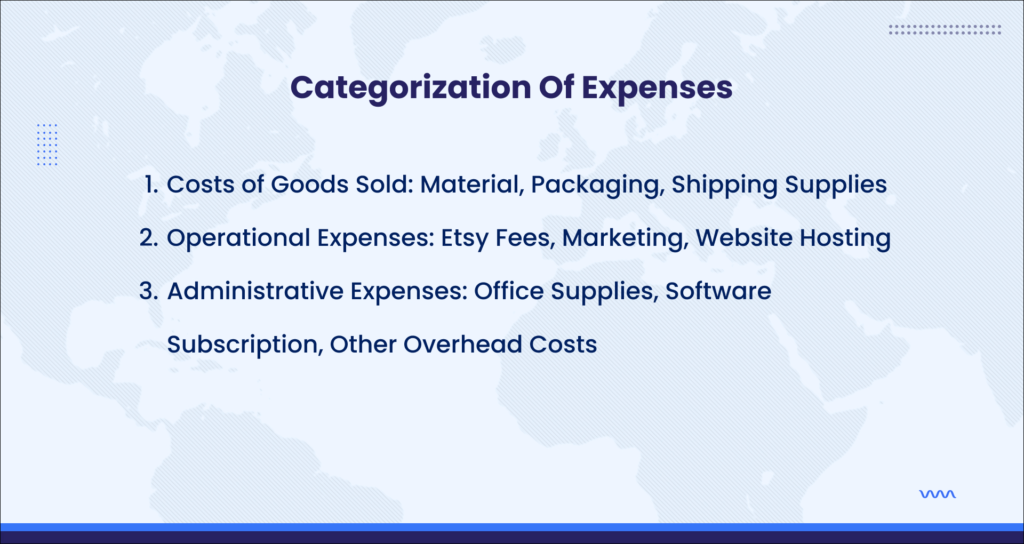
Having a structured and organized record of your expenses will clarify the cost structure and is significantly important in helping you prepare for the taxes. However, you need to review the categorization and chart periodically to evaluate any overspending or a need for a new category. This will optimize the cost and resources for you.
Clearly Distinguishing Personal and Business Finances
When you are getting started with a business or a new seller on Etsy, you are building up a foundation for your future business. A golden tip for Etsy sellers is to keep their personal and business-related expenses separate. Now, the question is if you are spending money on both sides, why does it need to be separated?
This is a common mistake made by sellers when they merge these finances. This gives a huge setback when it is time to file a tax return, as both types of finances are dealt with differently.
So, the best approach is to get a separate bank account for your Etsy business. This will help you to keep a track record of your business finances, manage it, and make informed decisions while investing, making a budget for the next fiscal half, or determining the growth of your business.
Inventory Management and Determining the Cost of Goods Sold
What is in stock, how much is available on the shelf, and how much is the capacity to produce and store goods; this all comes in inventory management. For sellers, it is important to have this knowledge and the impact it can make on the sales and profit margin of your business. Inventory management requires you to know what is already sold, what is out of stock, and when and what has to be restocked. This will optimize your cost and resources, ensuring you are never out of stock, but will also optimize the Cost of Goods Sold (COGS) and profit margin.
The second term, Cost of Goods Sold, refers to the overall price of your product, starting from raw material, procurement, manufacturing, shipping, and thus every single penny that you spend to complete your goods. Calculation of COGS correctly also impacts your pricing and profit. For a ceramic mug that costs you seven dollars of raw material and five dollars of labor, the COGS will be $12. Now, to ensure a sustainable and favorable margin profit, the price of the finished product should be kept above this price while adding other operational costs and factors.
Regulatory Compliance and Tax Preparation for Etsy Sellers
If you have trouble with mathematics, statistics, and tax preparation and compliance can be a nightmare and daunting experience for you. However, it is inevitable and indispensable for your business. Although, when you get started with a business you must be aware and know about sales tax, income tax, and other such compliances. These regulations cannot be generalized by Etsy as they differ from state to state. So, you must do your initial research first.
You need all the documents including receipts, invoices, and financial statements because they are required for this process. You can keep a digital record of these documents on drive or cloud to avoid any loss or damage and ensure easy access when and wherever needed.
You can choose software that automates and manages taxes in compliance with federal and regional taxes, making it easier for you to deal with such a complex experience.
Leveraging Automation in the Bookkeeping Process
Streamlining bookkeeping for Etsy sellers is now possible with a few clicks. Thanks to automation now, you can focus on your business and create unique items to boost sales while automation looks after your bookkeeping.
Start from automating the recurring process, such as setting bank feed and importing transactions into bookkeeping software. Setting protocols to categorize the expenses and get an insight into your profit and financial trends with scheduled financial reports. Other tasks like data entry, reporting, and categorization, which take a lot of your time, can be automated with less chance of any error or mistake.
There are several software and solutions available in the market that help you to achieve your bookkeeping in less time and hustle, with maximum accuracy and precision with its robust features.
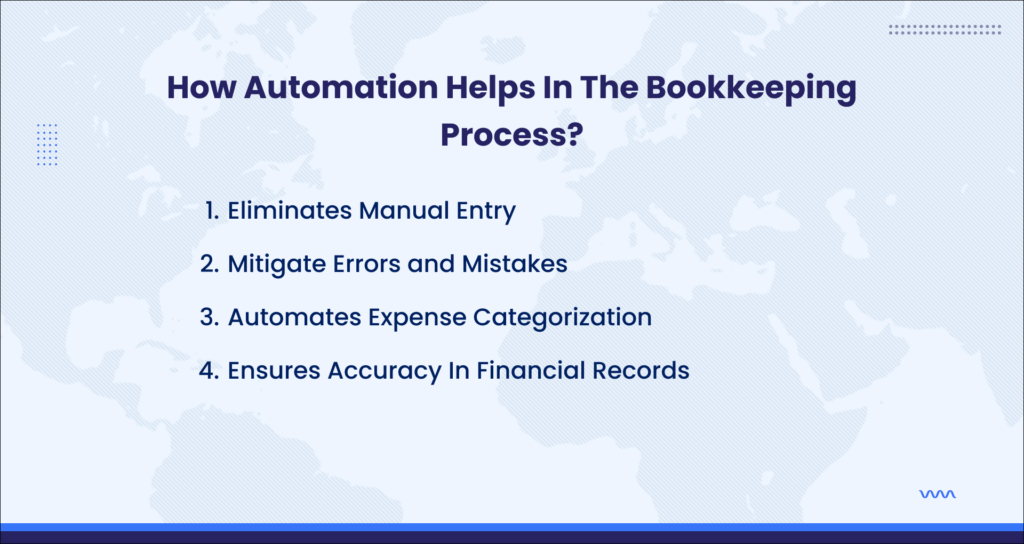
Optimizing Growth by Evaluating Financial Growth
The next step after setting up your bookkeeping system and ensuring it is running smoothly is to forecast and analyze the extent of growth of your business. The bookkeeping provides you with a holistic view of your business, a 360-degree evaluation of growth, and greater insight into the trends that favor your business. Now, using this data and analytics, you can analyze how far your business has come and what more it needs to achieve. What are the mandatory adjustments that can bring better results and profit in the future, and what practices need to come to a halt now?
Your financial statement helps you to see what profits you most, what times of the year when they are in trend, and what practices you should do to manage your cash more effectively. Understanding your cash flow, balance sheet, and profit and loss statement equips you with a clear view of your financial situation, enabling you to foster a better approach for the future.
Data-driven Decisions with Bookkeeping Insights
With all the data, financial reports, analytics, and insights, you are in a position to make an informed, better, and data-driven decision that can help your business flourish and bloom. It allows you to make a decision that will ensure long-term success and growth for your business while equipping it to sustain itself in a competitive market even if the trends fluctuate.
You get to know if you need to change your raw material, launch a new product, change the marketing strategy, or just need some reshuffling with your current ideas to gain more sales and turbocharge your profitability.
Make Bookkeeping Easier with The Pro Accountants
The chaos of accounts, statements, invoices, and other financial requirements is already a lot to deal with for a creative artist who has to focus on creation as their main goal and business. Bookkeeping for Etsy sellers is sometimes the nightmare they want to wake up from but cannot. If you are struggling with all these issues. Here, take a break, a glass of water, and sit back while we turn your nightmare into a pleasant memory.
At The Pro Accountants, our team of financial professionals who are certified and experts in their fields facilitate people like you who are struggling to overcome the struggles of financial paperwork and compliance. We provide services for bookkeeping, taxation, and even custom software that will streamline your bookkeeping while you can enjoy that time creating marvels for the people around you.
What are you waiting for now? Let yourself out of the shackles of these complexities and contact us today to get your bookkeeping sorted.
Among the multiple responsibilities — sales, marketing, customer relations, and more, the one task that tends to be the most daunting yet essential is managing your company’s finances. The accuracy and timeliness of your financial records are critical for maintaining cash flow, tracking profits, and staying compliant with tax regulations. Yet, bookkeeping can often fall to the bottom of your priority list, especially when you’re focused on growing your business.
This is where the idea of outsourcing comes in. Instead of spending hours each month tracking income and expenses, managing payroll, or dealing with tax filings, you can let professionals handle it all. Outsourcing your monthly bookkeeping services can relieve you of stress and ensure your business finances are managed accurately and efficiently.
In this guide, we’ll delve into the reasons why outsourcing your bookkeeping makes sense, the challenges of keeping the work in-house, and how it can lead to better overall financial health for your business.
Book Your Free One-Month Bookkeeping.
When Bookkeeping Becomes a Burden?
Imagine you’re at the end of a busy month. You’ve just completed a major project, your sales team has exceeded its goals, and your marketing efforts are paying off. But as you sit down to review your financials, the excitement fades. The task ahead feels monumental. Piles of receipts need organizing, invoices need sending, and payroll needs to be calculated. To top it off, tax deadlines are looming.
You put it off, hoping to find time tomorrow, but tomorrow turns into the next day, and before long, you’re months behind on your financial records. Sound familiar? Many business owners find themselves in this situation, struggling to stay on top of their finances while trying to run and grow their companies.
The Common Challenges of In-House Bookkeeping
Below are the most common challenges of in-house bookkeeping:
Lack of Expertise: Bookkeeping is a specialized skill, and if you or your team aren’t trained in finance, mistakes can happen. Incorrect entries or missed transactions can lead to costly errors down the road.
Time-Consuming: Every hour spent sorting through receipts, entering data, and reconciling accounts is an hour taken away from other vital business tasks. Managing your books in-house can quickly become a major time drain.
Stress and Burnout: As the months go by and the workload piles up, the stress of managing your financials can lead to burnout. This may result in incomplete or inaccurate records, which can create problems come tax season.
Missed Opportunities: Without accurate, up-to-date financial records, it’s difficult to make informed business decisions. You could miss out on opportunities for growth simply because your financial picture isn’t clear.
These challenges can cause ongoing frustration and hinder your ability to focus on your core business activities. However, there’s a better way to manage your financials without the headache.
The Case for Outsourcing
When you outsource your monthly bookkeeping services, you hand over a critical yet time-consuming task to experts who specialize in financial management. These professionals bring knowledge, experience, and tools to keep your financial records accurate, up-to-date, and compliant.
Why Outsourcing Works?
Outsourcing allows you to focus on what you do best — running your business. Here are some key reasons why outsourcing your bookkeeping services makes sense:
Expertise at Your Fingertips: When you outsource, you’re tapping into a team of trained professionals who are well-versed in financial regulations, accounting best practices, and tax laws. They know how to keep your financial records in order, reducing the risk of errors.
Time Savings: By delegating your bookkeeping to an external team, you free up valuable time to focus on your business. No more late nights or weekends spent managing financial records — just peace of mind knowing everything is being taken care of.
Cost-Effective: Hiring an in-house bookkeeper or accountant can be expensive, especially when you factor in salaries, benefits, and training. Outsourcing offers a cost-effective alternative, allowing you to access expert financial services without the overhead.
Scalability: As your business grows, your financial needs will change. Outsourcing allows you to scale your bookkeeping services based on your current requirements without the need to hire additional staff or invest in new software.
Improved Accuracy: With an experienced team handling your books, you’ll enjoy greater accuracy in your financial records. This reduces the likelihood of errors, missed transactions, or incomplete data.
Compliance and Security: Outsourcing firms are up-to-date with the latest financial regulations and tax laws. They can ensure that your business remains compliant, reducing the risk of audits or fines. Additionally, they use secure software and processes to keep your financial data safe.
How Outsourcing Your Bookkeeping Transforms Your Business?

Outsourcing your monthly bookkeeping services doesn’t just save you time and reduce stress; it also opens the door to growth. With accurate, real-time financial data at your fingertips, you can make informed business decisions, seize new opportunities, and plan for the future.
Enhanced Financial Clarity
One of the biggest advantages of outsourcing is that it provides you with a clear, up-to-date view of your finances. When you have accurate financial statements, profit and loss reports, and cash flow analysis, you can:
- Spot trends in your revenue, expenses, and cash flow, allowing you to make strategic decisions about where to invest or cut costs.
- With a clear understanding of your financial health, you can plan for expansion, hire new staff, or invest in new products or services with confidence.
- Cash flow is the lifeblood of any business. Outsourcing your bookkeeping helps you stay on top of incoming and outgoing payments, ensuring you have enough cash on hand to meet your obligations.
Reduced Risk and Improved Compliance
Tax laws and financial regulations can be complex and constantly changing. When you outsource your bookkeeping, you’re partnering with experts who stay up-to-date with the latest laws and compliance requirements. They ensure that your business stays compliant with local, state, and federal regulations, reducing the risk of costly fines or penalties.
Focus on Growth and Innovation
With your financials taken care of, you can shift your focus to the big picture. Whether it’s launching a new product, expanding into new markets, or investing in technology, outsourcing frees up your mental bandwidth to focus on innovation and business growth.
Why Many Businesses Resist Outsourcing?
Despite the many benefits of outsourcing, some business owners hesitate to make the switch. They may worry about losing control over their financial data or be concerned about the cost. However, these fears are often unfounded.
Common Concerns about Outsourcing:
“I’ll lose control of my financials.”
It’s natural to feel uneasy about handing over your financial records to someone else. However, reputable outsourcing firms work with you to ensure transparency and maintain open communication. You’ll still have access to your financial data at all times and can stay as involved as you want in the process.
“It’s too expensive.”
While outsourcing is an additional cost, it’s often more cost-effective than hiring a full-time in-house bookkeeper or accountant. You’ll save on salaries, benefits, and training, and you won’t need to invest in accounting software or tools. Plus, the time you save can be reinvested in growing your business.
“My business is too small to need outsourcing.”
Even small businesses can benefit from outsourcing. In fact, many small business owners find that outsourcing allows them to focus on growing their business without getting bogged down in financial details. Whether you’re a startup or a small business, outsourcing can help you stay organized and prepare for future growth.
What Happens When You Outsource Your Bookkeeping?
Outsourcing your bookkeeping is a straightforward process, but it can be helpful to understand what’s involved. Here’s an overview of how the process typically works:
Initial Consultation
The first step is a consultation with your outsourcing provider. During this meeting, you’ll discuss your business’s financial needs, review your current bookkeeping processes, and determine what level of service is required. Your provider will ask questions about your industry, business structure, and financial goals to create a tailored solution that works for you.
Onboarding
Once you’ve chosen to outsource, your provider will begin the onboarding process. This includes setting up any necessary software, transferring financial data, and establishing workflows. The onboarding process is designed to be smooth and efficient, ensuring that your financial records are seamlessly transitioned to the new system.
Ongoing Support and Communication
After onboarding, your outsourcing team will take over the day-to-day management of your financial records. They’ll handle everything from data entry and reconciliation to financial reporting and tax preparation. Throughout the process, you’ll have regular communication with your team to ensure everything is running smoothly. Most outsourcing providers offer online portals where you can access your financial data in real-time.
The Benefits of Outsourcing for Different Types of Businesses

While outsourcing your monthly bookkeeping services can benefit any business, the advantages can vary depending on your industry and size. Let’s explore how outsourcing can help different types of businesses.
Small Businesses
Small businesses often have limited resources, and owners may wear many hats. Outsourcing provides small business owners with the expertise they need without the cost of hiring a full-time bookkeeper. It also ensures that financial records are accurate and up-to-date, making it easier to apply for loans, attract investors, or plan for growth.
Growing Businesses
As your business grows, so do your financial needs. Managing payroll, invoicing, and expenses for a growing team can quickly become overwhelming. Outsourcing allows you to scale your financial services as your business expands, ensuring you have the support you need to manage growth without sacrificing accuracy or compliance.
Freelancers and Contractors
Freelancers and independent contractors may not think they need bookkeeping services, but even solo entrepreneurs can benefit from outsourcing. Managing taxes, tracking business expenses, and staying compliant with tax laws can be challenging for freelancers. Outsourcing provides peace of mind and ensures that all income and expenses are properly tracked, making tax season a breeze.
E-commerce Businesses
E-commerce businesses deal with unique financial challenges, such as inventory management, sales tax, and online payment processing. Outsourcing ensures that these complexities are handled efficiently and that your financial records reflect the intricacies of e-commerce transactions. This allows you to focus on driving sales and managing your online store.
Why You Should Choose The Pro Accountants?
By now, you understand the advantages of outsourcing your bookkeeping services. From saving time and reducing stress to improving accuracy and compliance, outsourcing allows you to focus on what you do best — running your business. But not all bookkeeping services are created equal, and that’s why it’s important to partner with a firm that understands your business’s unique needs.
At The Pro Accountants, we specialize in providing tailored financial services to businesses of all sizes. Whether you’re a small business owner, a growing company, or a freelancer, we’re here to support your financial health. Our team of experts is dedicated to delivering accurate, timely, and secure bookkeeping solutions so that you can make informed decisions and plan for the future.
Ready to take control of your business’s financial future? Schedule a meeting with The Pro Accountants today, and let us show you how outsourcing your bookkeeping can transform your business.
Frequently Asked Questions
What are the benefits of outsourcing my monthly bookkeeping services?
Outsourcing your bookkeeping offers several advantages. You gain access to expert financial management, meaning that qualified professionals handle your books with precision and care. It saves you time by allowing you to focus on growing your business while the outsourcing team manages the day-to-day financial details. Outsourcing also improves accuracy by reducing errors, and it’s more cost-effective than hiring full-time staff, as it eliminates the need to pay for salaries, benefits, or training. Additionally, outsourcing is scalable, meaning it can grow with your business as your financial needs become more complex.
Example: A small marketing agency outsourced their bookkeeping to avoid handling taxes and payroll. This allowed the owner to focus on expanding the client base without worrying about monthly financial tasks. The outsourced firm identified missed tax deductions, saving the agency $5,000 in taxes that year.
How does the process of outsourcing work?
The process typically begins with an initial consultation to understand your business’s financial needs. After that, the onboarding process starts, where your financial data is securely transferred to the outsourcing team, and the necessary systems are set up. Once this is complete, the team takes over the regular management of your books, including tasks like invoicing, payroll, and reconciliation. The outsourcing team will communicate with you regularly to ensure smooth operations and keep you updated on your finances.
Example: A therapist decided to outsource her bookkeeping and had an initial consultation with a specialized firm. The firm took over the integration of her practice management system with accounting software and started handling all her invoicing and expense tracking. She receives monthly updates and no longer has to worry about late invoices or expense errors.
Will I lose control over my financials if I outsource?
No, you won’t lose control over your financials when you outsource. Outsourcing firms operate with full transparency and give you real-time access to your financial data through secure software. You’ll continue to make the key financial decisions for your business, and the outsourcing firm will work closely with you to provide the reports and insights needed to make informed choices.
Example: A restaurant owner who was initially hesitant to outsource due to concerns about losing control quickly found that she could log into her secure dashboard at any time to see the latest financial reports, giving her peace of mind while letting the firm handle day-to-day bookkeeping.
Is outsourcing more expensive than hiring an in-house bookkeeper?
In most cases, outsourcing is more cost-effective than hiring an in-house bookkeeper. Hiring in-house involves paying salaries, benefits, and providing training, which adds up. Outsourcing allows you to pay only for the services you need and reduces the cost of errors, missed deadlines, or overlooked tax deductions, which can be costly for your business.
Example: A small law firm compared the cost of hiring a full-time bookkeeper with the price of outsourcing and found that outsourcing would save them 30% in annual costs. They also benefited from the expertise of a financial team that identified opportunities for cost savings and tax deductions.
Can small businesses benefit from outsourcing?
Absolutely. Small businesses often don’t need a full-time, in-house bookkeeper, but they still require expert financial management. Outsourcing allows small businesses to access the same high-quality bookkeeping services that larger companies enjoy, at a fraction of the cost. This allows owners to focus on running their business, while the outsourcing firm handles all the financial tasks.
Example: A freelance graphic designer found that outsourcing her bookkeeping allowed her to focus more on client work. Instead of spending hours tracking income and expenses, she let the outsourcing firm handle it, which freed up time to take on more projects and increase her income.
What types of businesses should consider outsourcing?
Any business can benefit from outsourcing its bookkeeping, but it’s particularly helpful for small businesses, freelancers, contractors, e-commerce businesses, and companies experiencing growth. Outsourcing is also great for companies with complex financial needs, such as managing payroll, inventory, or multiple income streams, where expert financial services are required to keep everything running smoothly.
Example: A rapidly growing online clothing store outsourced their bookkeeping to manage increasing sales, inventory, and payroll for new employees. This allowed them to scale operations without worrying about falling behind on financial management.
Is outsourcing secure?
Yes, reputable outsourcing firms use advanced software and secure processes to protect your financial data. They often employ encryption, multi-factor authentication, and secure backups to ensure that your data is safe. Additionally, these firms stay compliant with data protection regulations like GDPR or HIPAA if applicable, ensuring that your financial information remains private and secure.
Example: A medical practice that deals with sensitive client data, including insurance information, outsourced their bookkeeping to a firm specializing in HIPAA-compliant systems. The practice appreciated that the outsourcing team used encrypted software, ensuring that all financial records remained secure.
How often will I receive updates on my financials?
Most outsourcing firms offer real-time access to your financial data via cloud-based software, so you can check your financials whenever you need. You can expect regular updates, typically monthly, with comprehensive financial reports that include income statements, balance sheets, and cash flow reports. Some firms also provide more frequent updates if needed.
Example: An e-commerce business outsourced their bookkeeping and received monthly financial reports. However, during a peak sales period, they requested weekly updates on cash flow and inventory costs, which the outsourcing firm was able to provide, helping them stay on top of their financials during the busy season.
Can outsourcing help with tax preparation?
Yes, most outsourcing firms offer tax preparation services as part of their package. They ensure that your financial records are accurate, up-to-date, and compliant with tax laws, which reduces the stress of tax season. By having experts handle tax preparation, you minimize the risk of errors, missed deductions, and potential audits, all while staying in compliance with local and federal tax laws.
Example: A local real estate firm that outsourced their bookkeeping found that during tax season, their outsourcing team handled all their financial reports and submitted their tax return on time. The team also helped identify deductible expenses, saving the firm thousands of dollars.
How do I get started with outsourcing my bookkeeping services?
The first step is to schedule a consultation with a reputable outsourcing firm, such as The Pro Accountants. During the consultation, you’ll discuss your financial needs, business goals, and any concerns you might have. The team will then create a customized plan for managing your bookkeeping and other financial tasks. Once you agree to the terms, the onboarding process begins, and you’ll be set up with the tools and systems to make outsourcing smooth and efficient.
Example: A nonprofit organization that needed help managing donations and grants scheduled a consultation with The Pro Accountants. After discussing their needs, the firm set them up with a tailored bookkeeping plan that allowed them to track donations and expenditures accurately while staying compliant with nonprofit regulations.
You might see a list of experienced bookkeepers or accounting organizations offering basic to premium bookkeeping services online and on-site as well. But are they offering what you actually need? Are you aware of the essential bookkeeping checklist that can streamline your organization?
To answer these questions, I have written a comprehensive guide personalized as per your business requirements. The Pro Accountants experts know that running a small business or a large enterprise requires strong grip on a lot of things, financials being the top.
We know that proper financial management is the backbone of any successful business but unfortunately, many business owners find themselves bogged down in the nitty-gritty details of their finances. They are so unsure of how to maintain accurate records, keep up with compliance, or streamline their processes that they end up taking poor decisions.
Being a decision maker, any confusion, the worry about errors, or the constant race against deadlines can lead you to mistakes that could cost your business time and money. To avoid this kind of scenario, you need to bring clarity to your processes like a structured, well-thought-out bookkeeping checklist that covers all essential tasks on a daily, weekly, monthly, and yearly basis.
Now let’s just discuss the common challenges and the ways to overcome those with proper knowledge or assistance from the experts.
The Struggle of Managing Your Business Finances
Imagine it’s the end of the month, and you’re sitting down to review your firm’s financial statements. You have a pile of receipts, invoices, and bank statements in front of you. Some transactions don’t match up. A payment was missed, and now there’s a late fee. On top of that, tax deadlines are around the corner, and you still haven’t reconciled your accounts. You start to feel the pressure of the task ahead.
This scenario is all too common for business owners and managers. Bookkeeping can quickly become overwhelming, especially without a structured system in place. The absence of a solid checklist to guide you through the process leads to errors, missed opportunities, and a lot of unnecessary stress. You may even find yourself questioning whether you’re on top of all the financial tasks required to keep your business running smoothly.
This is where an organized bookkeeping checklist or an expert advice can make all the difference.
Why Do You Need a Bookkeeping Checklist?
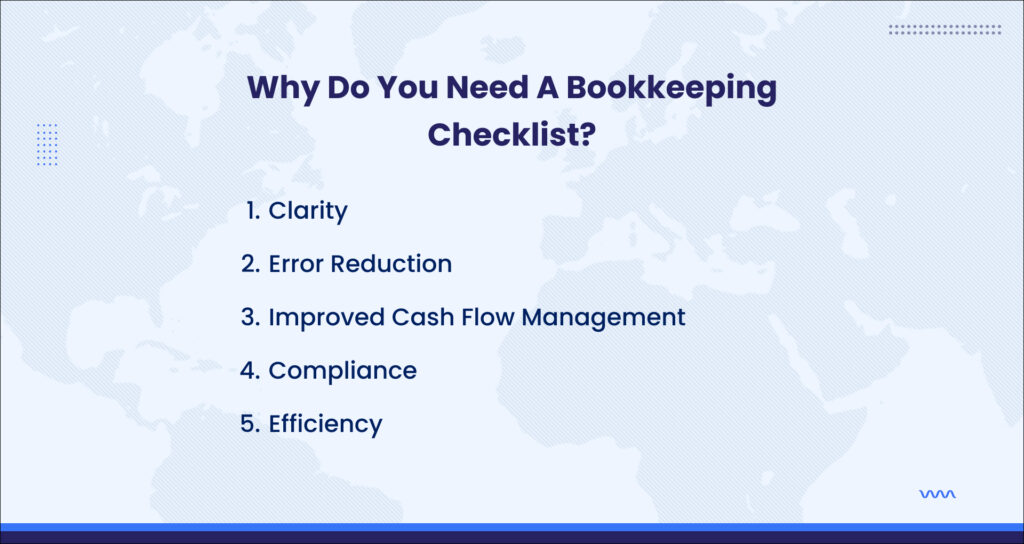
At its core, a bookkeeping checklist is a structured way to ensure that every aspect of your firm’s finances is covered on a regular basis. Instead of playing catch-up or dealing with financial surprises, you can systematically address financial tasks and prevent issues before they arise. Other than that, you will get the following perks:
Clarity and Focus
A checklist breaks down complex financial tasks into smaller, manageable steps. This helps reduce overwhelm and allows you to focus on what needs to be done now versus what can wait.
Error Reduction
One of the biggest risks of unorganized bookkeeping is errors. A checklist ensures that every essential task is completed, reducing the chance of mistakes like miscalculations or missed payments.
Improved Cash Flow Management
Consistent financial tracking means you always have a clear understanding of your cash flow. You can plan better, make informed decisions, and avoid cash crunches.
Compliance and Timeliness
Staying compliant with tax laws and meeting deadlines becomes easier when you have a structured plan to follow. You won’t miss deadlines or incur penalties for late filings.
Efficiency
Having a checklist means less time is wasted on trying to figure out what needs to be done. You’ll know exactly what tasks to tackle and when, which boosts overall efficiency.
With the benefits clear, let’s move on to what tasks should be included in your daily, weekly, monthly, and yearly bookkeeping checklists.
Your Every Action Matters
Keeping up with daily financial tasks is essential to maintaining a healthy business. These are the routine jobs that ensure your firm’s financials remain up-to-date and accurate.
Small mistakes, like missing an expense or forgetting to invoice a client, can compound over time if not caught early. You should do the following practices:
Record Income and Expenses – Every day, make it a habit to record any new transactions, whether it’s income from clients or expenses like office supplies. This ensures that nothing slips through the cracks.
Track Payments and Receivables – Keep track of any payments that are due and ensure that your receivables are collected promptly. This helps maintain your cash flow.
Monitor Your Cash Flow – By staying aware of your cash flow daily, you can anticipate any shortages or surpluses and plan accordingly.
By completing these daily tasks, you’ll have a real-time view of your firm’s financial health, enabling better decision-making throughout the week.
Weekly Financial Management to Stay on Top of Recurring Tasks
Your weekly bookkeeping checklist should focus on reviewing your finances in greater depth and handling tasks that don’t need to be completed every day.
Weekly financial reviews help you identify patterns, correct small mistakes from your daily bookkeeping, and ensure that recurring obligations like payroll or vendor payments are handled on time.
Key Weekly Tasks Include:
- Make sure your bank account balances match your records. Reconciliation helps catch errors such as double payments or missed transactions early.
- Go through your vendor invoices and ensure payments are made on time. Late payments can affect your relationships with vendors and lead to late fees.
- If you run payroll on a weekly or bi-weekly basis, ensure that all timesheets are accurate and that employees are paid on time.
- Take time to review key reports, such as profit and loss statements or balance sheets. These reports give you a snapshot of your firm’s financial status.
By conducting these weekly checks, you can prevent financial surprises and keep your firm’s operations running smoothly.
Monthly Financial Tasks for a Broader Review
At the end of each month, it’s important to take a step back and review your firm’s financial performance on a larger scale. Monthly financial tasks give you an opportunity to correct any errors, adjust your financial strategy, and prepare for future growth.
Things that you need to focus on each month are to reconcile credit card statements same as you do for your bank accounts. Your credit card statements should be reconciled monthly as this ensures that all transactions are accounted for and helps catch any fraudulent charges.
Secondly, you need to review budget and your actual income as this allows you to adjust your financial plan if necessary and understand where your firm is overspending or underspending.
Thirdly, prepare financial statements at the end of each month. Generate financial statements such as income statements, balance sheets, and cash flow reports as these documents are critical for understanding the health of your firm and for reporting to stakeholders or lenders.
Finally, review your accounts receivable and payable to ensure that all outstanding invoices are collected and all due payments are made. This helps maintain a healthy cash flow and strengthens relationships with clients and vendors.
Completing these monthly tasks will give you a clear picture of your firm’s overall financial performance and ensure that you’re on track to meet your goals.
Annual Bookkeeping Tasks
As the year comes to a close, it’s time to review your firm’s finances on a yearly basis. Yearly bookkeeping tasks are larger, more strategic tasks that help you prepare for tax season and set the stage for the upcoming year.
The Role of Annual Bookkeeping
Your annual financial review gives you a comprehensive overview of your firm’s performance. It also allows you to plan for the future by setting new financial goals and preparing for tax filings.
Essential Year-End Tasks Include:
Prepare for Tax Filing
Review all your income, expenses, and deductions for the year to ensure that your tax filings are accurate. This is also a good time to meet with a tax professional to discuss any potential tax savings strategies.
Conduct a Full Financial Review
Review all of your financial statements from the past year to understand your firm’s overall performance. This will help you identify areas for improvement and set new financial goals for the upcoming year.
Adjust Budgets for the Next Year
Based on your financial performance, adjust your budget for the coming year. This ensures that your spending aligns with your firm’s financial goals.
Review and Update Insurance Policies
Review your firm’s insurance policies to ensure that you have adequate coverage for the coming year. This includes business liability, property, and health insurance for employees.
By completing these annual tasks, you’ll be prepared to enter the New Year with a clear financial strategy in place.
Overcoming Common Bookkeeping Challenges
Every firm, regardless of its size or industry, faces challenges when it comes to managing finances. While a structured bookkeeping checklist can help mitigate many of these issues, it’s important to recognize the specific challenges that firms often encounter.
The most common bookkeeping challenges that many businesses face include a variety of critical issues, each impacting the efficiency and accuracy of financial management.
One of the primary challenges is time management. Business owners often struggle to find sufficient time to keep up with daily or weekly bookkeeping tasks. This can result in financial records falling behind, leading to errors and missed deadlines that may complicate other aspects of the business. The second challenge is a lack of expertise. Not all firms have the in-house knowledge to manage their books accurately, and this gap can lead to mistakes, missed tax deductions, and even compliance issues that could be costly or disruptive.
Another major challenge is cash flow management. Poor cash flow oversight is one of the most significant financial hurdles businesses face. Without a clear understanding of cash flow, companies risk running into financial troubles, even if they are otherwise profitable. Additionally, compliance issues present a challenge, as tax laws and financial regulations are often complex and constantly evolving. Staying compliant requires an in-depth understanding of these rules, which many firms simply do not possess.
The key to overcoming these challenges lies in maintaining organization, establishing a structured bookkeeping process, and seeking professional assistance when necessary. For firms that struggle to keep up with their financial tasks, outsourcing to a professional service like The Pro Accountants can be transformative.
By outsourcing financial management, firms can ensure that all bookkeeping tasks are handled accurately and promptly. This approach allows business owners to focus on growth rather than worrying about financial record-keeping.
Wrapping Up
Staying on top of your firm’s finances doesn’t have to be stressful. By following a structured bookkeeping checklist, you can ensure that every aspect of your firm’s financial management is covered, from daily tasks to yearly reviews.
If you’re feeling overwhelmed or simply want to improve your firm’s financial processes, consider partnering with The Pro Accountants. Our team of financial experts can help you streamline your bookkeeping, improve cash flow management, and ensure compliance with all tax laws and regulations.
Ready to take control of your firm’s finances? Schedule a meeting with The Pro Accountants today, and let us show you how we can help you streamline your bookkeeping and set your firm up for long-term success.
Frequently Asked Questions
What is the benefit of having a daily bookkeeping checklist?
A daily bookkeeping checklist helps you maintain a close watch on your income, expenses, and other critical financial transactions in real-time. By updating your records every day, you can quickly catch and correct small errors before they escalate into bigger issues. Additionally, this routine allows you to track your cash flow daily, giving you insight into spending patterns and incoming revenue. A consistent daily approach also ensures that you are always audit-ready and can respond to unexpected expenses or opportunities with up-to-date financial data.
Why is reconciling bank accounts important?
Reconciling your bank accounts is crucial because it ensures your financial records align with your bank’s statements, catching any discrepancies, errors, or unauthorized charges. By reconciling frequently—ideally monthly—you have the opportunity to review all account activity, identify missing or duplicate entries, and correct mistakes early. Regular reconciliation also builds a strong foundation for accurate financial reporting, which is essential for audits, tax filings, and maintaining a clear picture of your business’s financial health.
How often should I review my financial statements?
Reviewing your financial statements at least once a month is essential to monitor your firm’s financial performance and track progress toward goals. Monthly reviews allow you to identify trends, such as consistent overspending in certain areas, early enough to take corrective action. Additionally, monthly checks ensure that you’re not faced with unexpected financial surprises at year-end. Yearly reviews, on the other hand, provide a comprehensive overview for tax preparation and strategic planning, giving you a high-level view to help guide long-term business decisions.
What is the purpose of a yearly bookkeeping review?
A yearly bookkeeping review gives you a full overview of your firm’s financial performance for the past year, which is invaluable for evaluating your business’s overall health. It prepares you for tax filings, as all transactions are reviewed, verified, and organized, which minimizes the risk of errors in your tax returns. A year-end review also lays the groundwork for next year’s budgeting and forecasting by highlighting areas where you exceeded or fell short of expectations, guiding more effective financial planning and goal-setting.
How can I improve my cash flow management?
Improving cash flow management involves closely monitoring your income and expenses, setting a structured review process, and frequently updating your accounts receivable and payable. Start by creating a forecast that projects your cash inflows and outflows, allowing you to anticipate periods when cash might be tight and plan accordingly. Automating invoicing and payment reminders can also speed up collections, reducing the amount of time cash is tied up in accounts receivable. Additionally, a well-organized bookkeeping system can help identify and reduce unnecessary expenses, further enhancing your cash flow stability.
What are the risks of falling behind on bookkeeping?
Falling behind on bookkeeping can lead to numerous issues, such as undetected errors, missed payments, and late tax filings, each of which can impact your business’s credibility and financial health. Without updated records, you lose visibility into your cash flow, making it harder to make informed decisions. This lack of oversight can result in missed tax deductions, penalties, and even compliance issues if regulatory deadlines are missed. In the long run, outdated bookkeeping can create chaotic financial records, which makes audits, tax preparations, and even day-to-day operations more challenging.
Can I outsource my firm’s bookkeeping tasks?
Yes, outsourcing bookkeeping is a practical solution that can save time, reduce errors, and allow you to focus more on core business activities. A professional bookkeeping service, like The Pro Accountants, offers the expertise to handle complex financial tasks, ensuring compliance, accuracy, and efficiency. Outsourcing can be especially beneficial if your firm lacks in-house financial expertise or if managing bookkeeping has become too time-consuming. By delegating these tasks, you gain access to specialized knowledge and tools, which can improve your financial management.
How do I know if my firm needs a professional bookkeeping service?
If bookkeeping is consuming more of your time than it should, or if you frequently find discrepancies in your financial records, it may be time to consider hiring a professional bookkeeping service. Common signs include falling behind on records, struggling with compliance, missing tax deductions, and experiencing difficulty managing cash flow. By working with professionals like The Pro Accountants, you can bring structure and accuracy to your financial management, allowing you to focus on growing your business rather than worrying about numbers.
What should I include in my monthly bookkeeping review?
Your monthly bookkeeping review should cover account reconciliation, financial statement analysis, budget comparisons, and updating invoices and payments. Start by reconciling bank and credit card statements to ensure all transactions are accurately recorded. Then, review key financial statements, such as income and expense reports, to assess performance and make adjustments if necessary. Check your budget against actual spending to track any variances. Finally, verify that all invoices are sent out and payments are collected, which helps maintain a healthy cash flow and prevents delays in receivables.
How do I get started with outsourcing my bookkeeping?
To start outsourcing your bookkeeping, the first step is to set up a consultation with a professional service like The Pro Accountants. During this meeting, your financial needs will be assessed, and a tailored plan will be developed to address your specific requirements. A reputable bookkeeping service will guide you through the transition process, including data transfer, system setup, and initial reconciliation. Once the system is in place, the service will manage your financial records, ensuring accuracy, compliance, and timely reporting while you focus on your core business activities.